

US BESS Roundup: e-Storage, Spearmint & OCI Advance 975MWh of Battery Projects in Michigan and Texas
Three major US battery energy storage developments announced on June 25, 2026, collectively advance nearly 1GWh of BESS project finance across Michigan and Texas—two of America's fastest-growing storage markets. Canadian Solar subsidiary e-Storage secured a 381MWh supply contract with Apex Clean Energy in Michigan, Spearmint Energy closed a $325 million expanded debt facility for its Texas portfolio, and OCI Energy completed approximately $130 million in tax equity financing for its 480MWh Alamo City BESS in Bexar County, Texas.
e-Storage & Apex Clean Energy: 75MW/381MWh SolBank 3.0 for Michigan's 2.5GW Mandate
Canadian Solar's integration arm e-Storage will supply a 75MW/381MWh DC-coupled BESS to Apex Clean Energy's Branch County project in Michigan, deploying the company's latest SolBank 3.0 integrated solution—which bundles power conversion systems (PCS) with the EQ-S energy management system (EMS) in a single containerized architecture. The project is scheduled for equipment delivery in early 2027 with commercial operations targeted for mid-2027, aligning directly with Michigan's legislated 2.5GW energy storage mandate by 2030. This BESS project finance milestone demonstrates how state-level storage mandates are creating bankable revenue visibility for project developers and equipment suppliers alike, moving Michigan from a nascent storage market toward a procurement pipeline that could rival leading states within the decade.
Spearmint Energy: $325 Million Debt Expansion for Texas Portfolio
Spearmint Energy has secured a $325 million expanded debt facility—upsized from an earlier financing round—provided by a consortium including Nuveen, Elda River, Harrison Street, and Aiga Capital Partners. The facility supports Spearmint's Texas BESS portfolio spanning the Tierra Seca, Seven Flags, and Revolution projects, along with the company's growing national development pipeline. This BESS project finance expansion reflects the maturation of storage as an institutional asset class: five years ago, multi-hundred-million-dollar debt facilities for pure-play storage developers were virtually unheard of; today, they are becoming standard financing instruments. For developers tracking capital availability in the storage sector, shop now to explore AGAIC POWER's bankable BESS solutions designed to meet institutional investment criteria.
OCI Energy & Greenprint Capital: $130M Tax Equity for Alamo City 4-Hour BESS
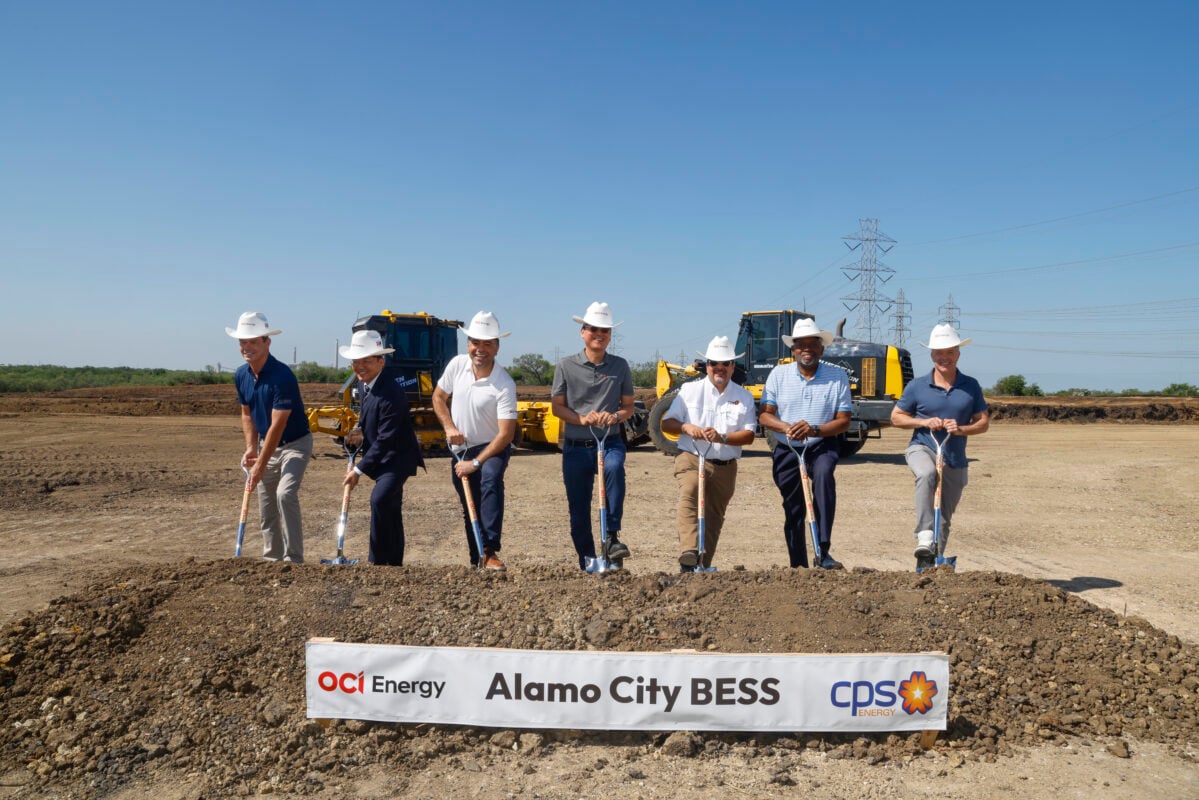
OCI Energy has completed approximately $130 million in tax equity financing with Greenprint Capital for the 120MW/480MWh Alamo City BESS in Bexar County, Texas—one of the few 4-hour duration storage assets in the ERCOT market. LG Energy Solution Vertech is supplying the battery systems, with commercial operations expected in 2027. The tax equity structure—leveraging the Investment Tax Credit (ITC) available to standalone storage under the Inflation Reduction Act—is becoming the dominant BESS project finance mechanism for US storage projects, enabling developers to monetize tax credits through partnerships with institutional tax equity investors like Greenprint Capital. The 4-hour duration profile at this scale positions Alamo City to capture multiple ERCOT revenue streams: energy arbitrage, ancillary services (ECRS, Reg-Up, Reg-Down), and potentially the newly introduced ERCOT Contingency Reserve Service.
Michigan's 2.5GW Storage Mandate: Why the Midwest Matters Now
The e-Storage/Apex Clean Energy deal highlights a market shift that many industry observers have been tracking: Midwestern states are emerging as significant storage markets, driven by coal plant retirements, renewable energy buildout, and increasingly ambitious state-level mandates. Michigan's 2.5GW by 2030 target—one of the more aggressive state-level storage policies outside of California, New York, and Texas—is translating into concrete procurement action. The Branch County project's 381MWh capacity represents meaningful scale for a market entry project, suggesting that Apex Clean Energy and e-Storage view Michigan not as a policy experiment but as a durable, multi-gigawatt-hour opportunity. For equipment suppliers and developers seeking geographic diversification beyond the saturated ERCOT and CAISO markets, Michigan and the broader MISO region represent one of the most compelling growth frontiers in US BESS project finance today.
Texas: The Tax Equity Laboratory for Standalone Storage
Texas continues to serve as the proving ground for innovative storage financing structures. The OCI Energy/Greenprint Capital tax equity deal demonstrates how IRA provisions have transformed standalone storage from a merchant-risk-only proposition into an asset class capable of attracting institutional tax equity—the same financing mechanism that propelled US wind and solar deployment over the past two decades. With ERCOT load growth projections escalating due to data center expansion and electrification, 4-hour duration assets like Alamo City are increasingly viewed as reliability resources rather than pure energy arbitrage plays—a perception shift that fundamentally changes how project lenders and tax equity investors underwrite storage assets. For investors evaluating BESS project finance opportunities across US markets, explore our collection of flexible energy storage configurations optimized for tax equity and project finance structures.
The Bigger Picture: US BESS Finance Enters a New Phase
Taken together, these three deals illustrate a BESS project finance market that has entered a new phase of maturity. Equipment supply contracts are scaling from tens to hundreds of megawatts per deal, debt facilities are expanding from project-level to portfolio-level financing, and tax equity structures are becoming standardized rather than bespoke. The diversity of participants—from global equipment manufacturers (Canadian Solar), to specialized storage developers (Spearmint), to infrastructure investors (Nuveen, Harrison Street), to tax equity specialists (Greenprint Capital)—signals that the US storage finance ecosystem now has the depth and breadth to support gigawatt-scale annual deployment. For an industry that was asking fundamental bankability questions just five years ago, the speed of financial maturation has been extraordinary.


