

South Australia BESS Fleet Rakes In AU$324,000 as Prices Hit $20,300/MWh Cap
South Australia's National Electricity Market (NEM) experienced one of its most dramatic pricing events of 2026 on the evening of June 21, as spot electricity prices twice hit the AU$20,300/MWh (US$14,270/MWh) market price cap. Over a 2-hour and 35-minute window, the South Australia battery storage fleet captured an estimated AU$324,000 in combined revenue, with four grid-scale batteries actively discharging into the market while two others—surprisingly—charged through the price spike.
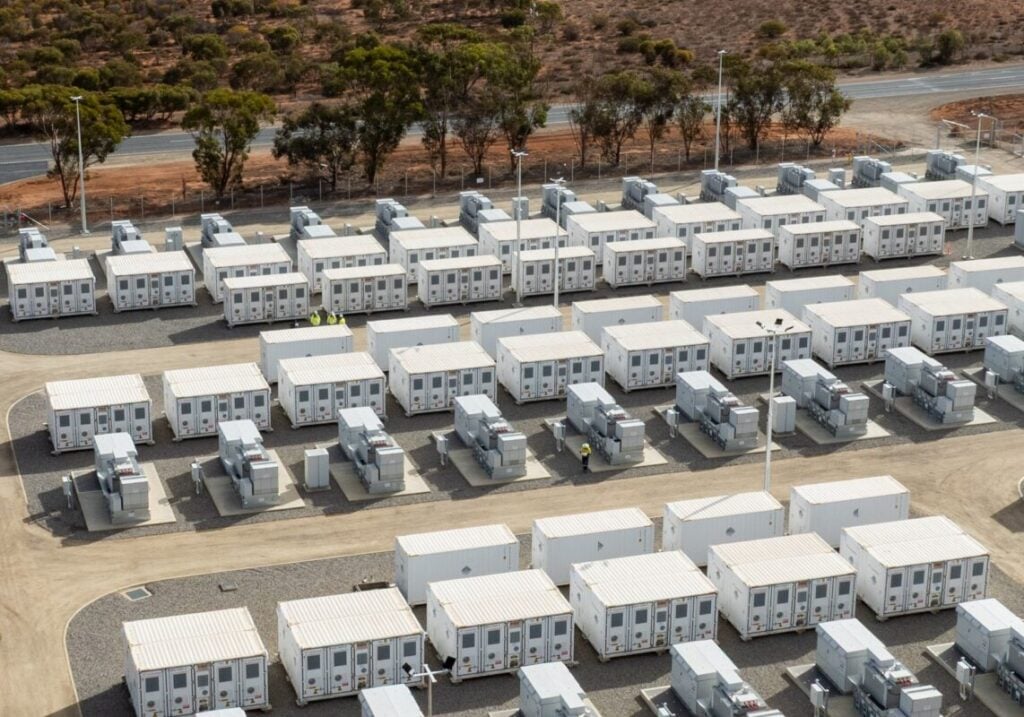
Mannum BESS Leads the Pack with AU$151,740
Epic Energy's 100MW/200MWh Mannum BESS delivered the strongest individual performance, generating an estimated AU$151,740 by discharging from 21.4% to 3.2% state of charge at an average output of 15MW. The Mannum system, optimized by UK-based Habitat Energy using its Evolve software platform and supplied by e-STORAGE with LFP SolBank technology, demonstrated why route-to-market optimization has become the defining competitive advantage in Australia's merchant battery market.
AGL Torrens Island and Hornsdale Power Reserve Join the Action
AGL's 250MW/205MWh Torrens Island BESS contributed AU$107,230 while simultaneously committing 107.8MW to frequency control ancillary services (FCAS)—the largest FCAS commitment of any battery during the event. Meanwhile, Neoen's iconic 150MW/193.5MWh Hornsdale Power Reserve—one of the world's first utility-scale battery storage systems—added a further AU$70,810. Dalrymple North BESS rounded out the active participants with AU$16,180. For energy traders and developers seeking to maximize BESS revenue in volatile markets, shop now to discover AGAIC POWER's high-performance storage solutions.
The Charging Anomaly: Two Batteries Lost AU$49,570
In a counterintuitive twist, NEMPulse data confirmed that two utility-scale batteries were charging rather than discharging as prices soared. Iberdrola's 25MW/52MWh Lake Bonney BESS1 lost an estimated AU$14,160, while ZEBRE's 111MW/330MWh Templers BESS lost AU$35,410 charging from 4.5% to 6.1% state of charge. Analysts note this is not necessarily a dispatch error—batteries may maintain minimum state of charge for contracted FCAS obligations or pre-existing bid schedules submitted before the price spike was forecast. Both systems started the event at very low state-of-charge levels (13.5% and 4.5% respectively), which may have physically constrained their ability to discharge regardless of price.
Why South Australia Keeps Hitting Price Caps
South Australia has built a track record as the NEM region most prone to extreme pricing events—a pattern closely tied to its world-leading renewable energy penetration and comparatively thin generation buffer when wind and solar output fall. The South Australia battery storage fleet has repeatedly proven its value during these events, with a similar AU$1,000/MWh+ heatwave event earlier this year demonstrating how batteries ration energy across peak demand windows. NEM-specific optimizers have been shown to capture materially more revenue than generic tools during such spikes, according to OptiGrid co-founder Sahand Karimi. For investors tracking the revenue potential of Australian BESS assets, visit our store to explore storage systems engineered for high-volatility markets.
Grid-Scale Storage: From Nice-to-Have to Must-Have
The June 21 event reinforces a clear lesson: in high-renewable-penetration grids, battery storage is no longer optional infrastructure. As South Australia pushes toward 100% net renewables, the frequency and intensity of these pricing events will only increase—making optimized, fast-responding BESS assets essential for both grid stability and merchant revenue generation. The 15-battery SA1 fleet has proven that the technology works; the next frontier is ensuring every megawatt-hour of available capacity is positioned to capture the value it creates.


