

Sodium-Ion Batteries Will Match LFP Costs by 2029: Moonwatt's Bold LCOS Parity Prediction
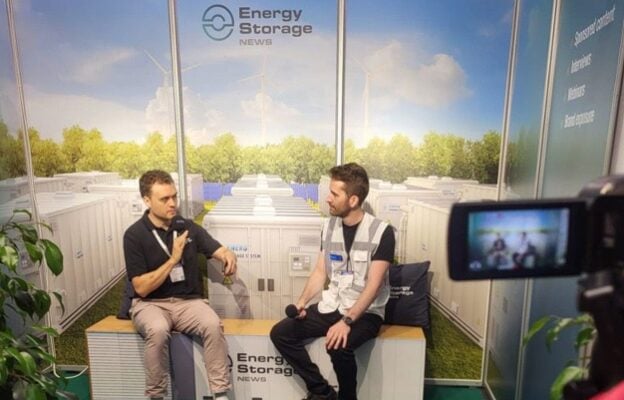
Sodium-ion battery startup Moonwatt has made one of the boldest predictions yet about the technology's commercial trajectory: sodium-ion battery LCOS (Levelized Cost of Storage) will achieve parity with lithium iron phosphate (LFP) within two to three years—meaning by 2029 at the latest—and will likely surpass LFP on a per-cycle cost basis even before absolute upfront prices equalize. Speaking exclusively to Energy-Storage.news at the Smarter E Europe trade show in Munich, Moonwatt co-founder and CCO Valentin Rota laid out the technical and economic argument for why sodium-ion's cost curve is steepening faster than most industry forecasts anticipate.
The LCOS Equation: Why Cycle Life Matters More Than Upfront Price
Rota's argument centers on a critical distinction that many cost comparisons miss: sodium-ion battery LCOS is driven primarily by cycle life and per-cycle cost, not by the upfront capital expenditure per kilowatt-hour. Sodium-ion batteries, he explained, exhibit inherently longer cycle life than LFP—a function of the chemistry's structural stability during sodium ion intercalation, which causes less mechanical stress on electrode materials over repeated charge-discharge cycles. This means that even if sodium-ion and LFP cells reach identical upfront prices—which Rota expects within the 2-3 year window—sodium-ion will deliver a lower LCOS because the same capital investment buys more total energy throughput over the asset's lifetime. For project developers accustomed to modeling LFP degradation curves, the implication is significant: switching to sodium-ion could meaningfully improve project IRRs even at price parity.
Moonwatt's Technology: 200kW Modular Sodium-Ion for Solar-Storage Hybrids
Moonwatt has developed a 200kW modular sodium-ion battery LCOS architecture specifically designed for photovoltaic DC/AC-coupled hybrid deployments—a use case where sodium-ion's broader operating temperature range and tolerance for deeper cycling offer operational advantages over LFP. The company's first demonstration project in the Netherlands has validated the core performance metrics, and Rota indicated that commercial-scale deployments are now being structured with European solar developers seeking alternatives to lithium-ion supply chains. The modular 200kW building block allows for scalable configurations from behind-the-meter commercial installations to multi-megawatt utility projects, providing developers with a single technology platform across project sizes.
The CATL 60GWh Catalyst: Sodium-Ion's Inflection Point Arrives
Moonwatt's prediction arrives at a moment of extraordinary momentum for the sodium-ion battery LCOS technology pathway. CATL's recently announced 60GWh sodium-ion supply agreement with system integrator HyperStrong—one of the largest single-technology storage procurement deals in history—has fundamentally altered the industry's perception of sodium-ion from "promising laboratory technology" to "manufacturing-scale commercial reality." When the world's largest battery manufacturer commits 60GWh of production capacity to a single chemistry, the learning curve effects on cost are inevitable: higher production volumes drive down manufacturing costs, improve yield rates, and accelerate incremental engineering improvements—a virtuous cycle that Rota believes will compress the timeline to LFP parity even further than current projections suggest.
Sodium Carbonate at 1% of Lithium Carbonate: The Structural Cost Advantage
Beyond the manufacturing learning curve, sodium-ion battery LCOS benefits from a structural raw material cost advantage that lithium-ion cannot match regardless of scale. Sodium carbonate—the primary cathode raw material—trades at approximately 1% of the price of lithium carbonate, and unlike lithium, sodium is geographically abundant, eliminating the concentrated supply chain risk that has made lithium prices historically volatile. While raw material costs represent only a fraction of total cell cost (with manufacturing, electrode processing, and cell assembly comprising the majority), the sodium supply chain's resilience against price spikes provides a cost stability that lithium-ion cannot offer—a feature that project finance lenders increasingly value when underwriting multi-decade storage assets. For developers building long-term procurement strategies, explore our collection of diversified energy storage solutions spanning multiple battery chemistries.
ees Europe 2026: Sodium-Ion Dominates the Conversation
At Smarter E Europe 2026—the continent's largest solar and storage trade fair—sodium-ion emerged as the single most discussed technology topic. Multiple manufacturers presented sodium-ion cell iterations targeting grid-scale storage applications, and conference sessions dedicated to non-lithium storage technologies were standing-room only. Rota noted that the enthusiasm is not merely technological curiosity: European developers facing growing regulatory pressure to diversify supply chains away from concentrated lithium-ion sources see sodium-ion battery LCOS as both a compliance solution and a potential cost advantage. As one developer at the conference put it: "Sodium-ion lets us solve two problems at once—supply chain diversification and cost reduction—and there's no other technology that can credibly claim both."
The Remaining Hurdle: Manufacturing Scale and Field Validation
Despite the bullish outlook, Rota was candid about the remaining challenges. Sodium-ion manufacturing capacity remains a fraction of LFP capacity, and while CATL's gigafactory-scale commitment is a powerful signal, the industry needs multiple manufacturers at scale to create a competitive supplier ecosystem. Equally important, field validation data for grid-scale sodium-ion deployments is measured in months, not decades—a gap that conservative project lenders and offtakers will require years of operational data to bridge. Moonwatt's strategy to address this is pragmatic: target early deployments in European markets where developers face acute supply chain diversification pressure, building the operational track record that will eventually unlock broader market acceptance. For forward-looking asset owners tracking next-generation storage technologies, visit our store to discover how AGAIC POWER's technology-agnostic platform can accommodate emerging battery chemistries as they reach commercial maturity.
2029 and Beyond: A Two-Chemistry Storage Market
Moonwatt's prediction points toward a future where the stationary storage market operates with two dominant chemistries: LFP for applications where proven technology and established supply chains are paramount, and sodium-ion battery LCOS for applications where lifecycle cost, supply chain diversity, and operational flexibility outweigh the value of the LFP track record. This two-chemistry paradigm mirrors the evolution of the solar module market, where monocrystalline and polycrystalline silicon coexisted for years before mono achieved dominance through superior efficiency. The key question for the storage industry is not whether sodium-ion will achieve cost parity with LFP—Moonwatt's analysis, CATL's commitments, and the fundamental materials science all point toward that outcome—but whether the operational track record will accumulate fast enough to satisfy the conservative underwriting standards of project finance. If it does, 2029 may be remembered as the year the storage market truly diversified.


