

Ola Electric's 46100 LFP Cell Earns BIS Certification: India's Battery Independence Moment
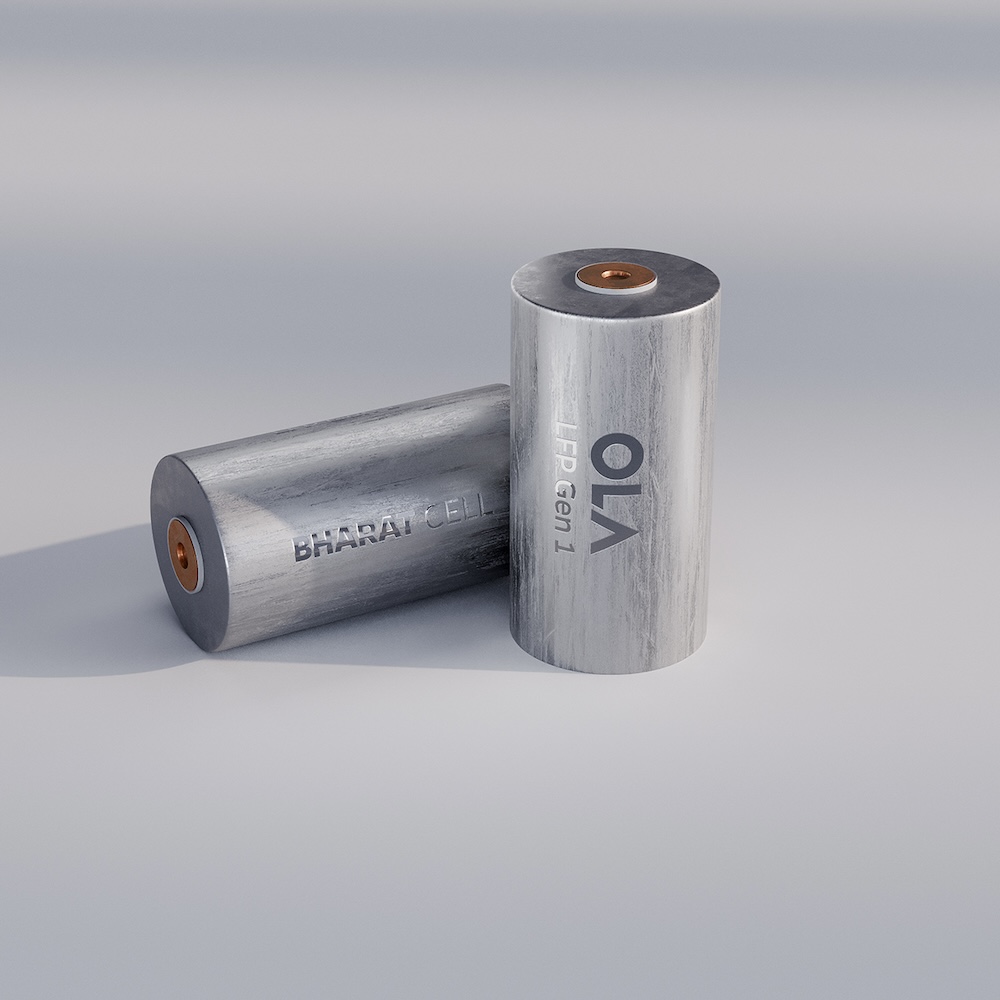
Ola Cell Technologies (OCT), a wholly owned subsidiary of Indian electric vehicle manufacturer Ola Electric, has secured Bureau of Indian Standards (BIS) certification for its indigenously developed 46100 LFP battery cell—a milestone that positions the company as the first Indian firm to receive BIS certification for a domestically developed cell in the 46100 cylindrical format. The certification, issued under IS 16046 (Part 2):2018/IEC 62133-2:2017, validates a lithium iron phosphate chemistry platform that Ola Electric is positioning for both electric mobility and stationary energy storage applications across the Indian market.
Technical Specifications: What the 46100 LFP Platform Delivers
The certified 46100 LFP battery cell achieves an energy density exceeding 170 Wh/kg—competitive with mainstream LFP cells from established global manufacturers—with a development pathway targeting more than 4,000 charge-discharge cycles. The cell's broad operating temperature capability, combined with LFP chemistry's inherent thermal stability and safety advantages (no thermal runaway below 270°C, no oxygen release during decomposition), makes it suitable for demanding environments including India's extreme summer temperatures. Ola Electric emphasized that the cell was "developed with significant localization across materials, components, engineering, and manufacturing processes," signaling the company's ambition to build a vertically integrated Indian battery supply chain rather than relying on imported cells with domestic assembly.
Certification Gauntlet: Thermal Abuse, Crush, Free Fall, and Beyond
The BIS certification process subjected the 46100 LFP cell to a comprehensive battery of safety, performance, and endurance tests at a National Accreditation Board for Testing and Calibration Laboratories (NABL)-accredited facility. The test regimen included thermal abuse testing (exposing cells to extreme temperatures to verify stable failure modes), external short circuit and forced discharge testing, impact and crush resistance evaluation, altitude simulation, abnormal charging and continuous low-rate charging scenarios, vibration testing for transportation durability, free fall assessment, and mechanical shock testing. The cell also successfully qualified under IS 16893 Parts 2 and 3 and UN 38.3 transportation safety standards—a certification stack that covers the full spectrum of electrical, mechanical, environmental, reliability, abuse, and logistics requirements for commercial deployment. For product developers evaluating certified cell platforms, explore our collection of validated energy storage solutions meeting international safety standards.
46-Series Architecture: One Platform, Two Chemistries
Ola Electric's strategic advantage lies in its common 46-series cylindrical architecture, which accommodates both the newly certified LFP 46100 cell and the company's previously commercialized NMC 4680 "Bharat" cell—already powering thousands of vehicles on Indian roads. This dual-chemistry, single-form-factor strategy allows Ola to deploy the most suitable cell chemistry for each application without redesigning pack enclosures, battery management systems, or thermal management subsystems. For mobility applications requiring higher energy density, the NMC 4680 provides maximum range; for stationary storage and entry-level EVs where safety, lifecycle cost, and durability outweigh peak energy density, the 46100 LFP battery cell offers a compelling alternative. This architecture-level optionality mirrors the approach of global leaders like CATL and BYD, who have similarly developed multi-chemistry platforms sharing common mechanical and electrical interfaces.
India's Domestic Battery Supply Chain: From Assembly to Manufacturing
Ola Electric's BIS certification carries significance beyond the company itself—it represents a milestone in India's broader ambition to transition from battery cell assembly to full-fledged domestic manufacturing. India currently imports the vast majority of its lithium-ion cells from China, South Korea, and Japan, creating both strategic dependency and foreign exchange exposure. The government's Production-Linked Incentive (PLI) scheme for advanced chemistry cell manufacturing has allocated INR 18,100 crore (approximately USD 2.2 billion) to build 50GWh of domestic manufacturing capacity, and Ola's certification demonstrates that at least one Indian company has crossed the threshold from policy aspiration to certified product. For energy storage project developers evaluating cell procurement strategies, visit our store to discover how AGAIC POWER's diversified BESS supply chain reduces technology risk.
EV-to-Storage Flexibility: The Dual-Application Advantage
Ola Electric explicitly notes that the certified LFP 46100 platform is designed for "future electric vehicles and stationary energy-storage solutions," opening a pathway for the company to enter India's rapidly growing grid-scale and commercial storage markets. With India's Central Electricity Authority projecting 74GW/411GWh of battery storage requirements by 2032, domestic cell manufacturing capacity is not merely a competitive advantage—it is a strategic necessity for national energy security. Ola's 46-series architecture, validated across both NMC and LFP chemistries, positions the company to serve both mobility and stationary storage markets from a single manufacturing base, capturing economies of scale that pure-play EV or storage cell manufacturers cannot match.
India's Battery Independence: A Watershed Certification
Ola Cell Technologies' BIS certification for the 46100 LFP battery cell may one day be viewed as the moment India's domestic battery industry graduated from policy papers and pilot lines to certified, commercially viable products. The certification validates not only a specific cell design but the broader proposition that Indian companies can develop, qualify, and industrialize advanced cell technologies within India's manufacturing ecosystem. With 4,000+ cycle durability, 170+ Wh/kg energy density, and a dual-chemistry platform architecture, Ola's LFP 46100 cell provides a credible foundation for both the company's mobility ambitions and India's emerging stationary storage market. The question now is execution: scaling from certification samples to gigawatt-hour manufacturing volumes while maintaining the quality and consistency that global customers demand.


