Iceland Geothermal Hydrogen SOEC LCOH $1.75/kg Analysis: Solid Oxide Electrolysis Cost Breakthrough and Green Hydrogen Future Explained
A groundbreaking demonstration project in Husavik, northern Iceland — operated by Chicago-based Syntholene and independently analyzed by global engineering firm KBR — has validated that geothermal-coupled solid oxide electrolyzer cell (SOEC) hydrogen production can achieve a levelized cost of hydrogen (LCOH) as low as $1.75 per kilogram under optimal Icelandic conditions, and approximately $2.10/kg under more generalized deployment scenarios. These figures represent roughly one-third of the current unsubsidized European green hydrogen benchmark price of approximately EUR 6.71/kg ($7.30/kg), making geothermal SOEC the first green hydrogen production pathway to demonstrate credible cost parity with gray hydrogen produced from unabated natural gas ($1.50-2.50/kg depending on natural gas prices). This analysis examines the technology, economics, and implications of this milestone for the global hydrogen economy.

Overview of the Syntholene Husavik SOEC Demonstration Facility
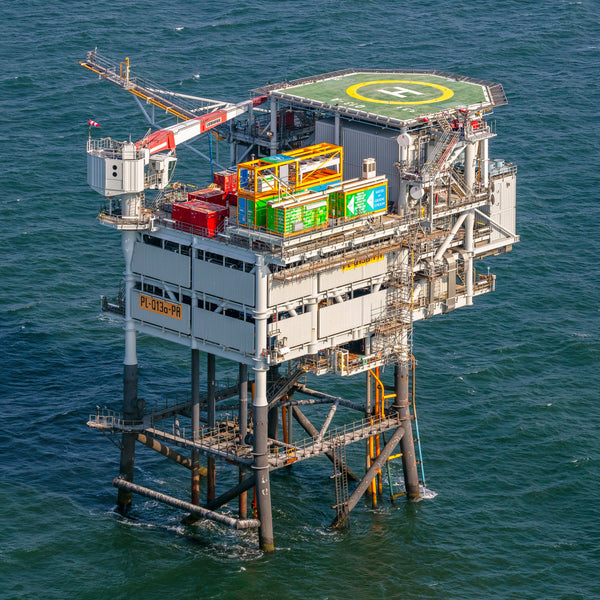
The Syntholene facility in Husavik — recognized as the world's first operational geothermal-coupled SOEC hydrogen production plant — leverages Iceland's unique combination of abundant, low-cost geothermal energy (with electricity prices as low as $25-35/MWh for industrial consumers with direct geothermal wellhead access) and high-temperature geothermal steam (150-250°C) that can be directly integrated into the SOEC thermal management system. This dual integration — electrical power for electrolysis plus thermal energy for maintaining the SOEC's optimal operating temperature of 700-850°C — is the key to the facility's exceptional economic performance, as it eliminates the need for electrical resistance heating to maintain SOEC operating temperature, a parasitic load that accounts for 10-15% of total energy consumption in non-geothermal SOEC configurations.
KBR, a Houston-headquartered global engineering, procurement, and construction firm with extensive experience in hydrogen and ammonia project economics, was commissioned to conduct an independent financial analysis of the Syntholene facility's cost model. KBR's analysis produced two LCOH scenarios: an "optimal Iceland" scenario at $1.75/kg, reflecting Husavik's specific geothermal resource quality (high-temperature steam availability, low-cost electricity, existing infrastructure) and a "generalized deployment" scenario at $2.10/kg, reflecting the economics of geothermal SOEC hydrogen production at sites with less optimal resource characteristics. Both scenarios demonstrate compelling economics relative to incumbent green hydrogen production pathways: alkaline electrolysis typically achieves $4.00-6.00/kg, and PEM electrolysis $5.00-8.00/kg, depending on electricity prices and capacity factors.
The KBR analysis identifies three primary risk factors that could increase realized LCOH above modeled values: (1) SOEC stack degradation rates — SOEC stacks operating at 700-850°C experience thermal cycling stress and material degradation that can reduce stack lifetime from the assumed 40,000-60,000 operating hours to 20,000-30,000 hours in real-world conditions, substantially increasing stack replacement costs; (2) electricity price volatility — while Icelandic geothermal electricity prices are relatively stable compared to wholesale market prices in continental Europe, any deviation from assumed prices has outsized impact on LCOH given that electricity accounts for 60-70% of SOEC hydrogen production cost; and (3) capacity factor assumptions — the KBR model assumes 85-90% capacity factor, which is achievable with baseload geothermal but requires high equipment reliability that has not yet been demonstrated over multi-year operational periods for SOEC technology.
Why This Matters: Green Hydrogen Cost Competitiveness Milestone
The significance of the $1.75/kg LCOH figure extends far beyond the specific Syntholene project. Green hydrogen has been positioned as a critical decarbonization vector for hard-to-abate industrial sectors — steelmaking, ammonia production, refining, chemicals, heavy transport — but adoption has been constrained by cost. At $4.00-8.00/kg, green hydrogen cannot compete with gray hydrogen ($1.50-2.50/kg) without substantial subsidies (the US 45V production tax credit of up to $3.00/kg, European Hydrogen Bank auctions, national subsidy programs). The Syntholene demonstration suggests that geothermal SOEC can achieve unsubsidized cost competitiveness with gray hydrogen at the upper end of the natural gas price range, and with relatively modest carbon pricing or subsidies can undercut gray hydrogen across the full natural gas price spectrum.
However, the geographic constraint is significant: geothermal SOEC hydrogen production requires co-location of high-quality geothermal resources with hydrogen demand or hydrogen transport infrastructure. Globally, only a limited number of regions offer this combination — Iceland (which has ambitious hydrogen export plans to Europe via subsea pipeline or ammonia carrier), the Western US (California, Nevada geothermal fields with proximity to California hydrogen demand), East Africa (Kenya, Ethiopia Rift Valley geothermal with proximity to emerging industrial demand), New Zealand, Japan, Indonesia, and the Philippines. For these specific geographies, geothermal SOEC could enable cost-competitive green hydrogen production decades earlier than electrolysis pathways that depend on intermittent renewable electricity and grid-scale storage. AGAIC POWER's energy storage solutions play a complementary role in enabling renewable-powered hydrogen production through grid stabilization and energy time-shifting.
Technical Deep Dive: SOEC vs. Alkaline vs. PEM Electrolysis — Engineering Comparison
The fundamental engineering distinction between SOEC and the more widely deployed alkaline and PEM electrolysis technologies is operating temperature and the resulting thermodynamic efficiency advantage. Alkaline electrolyzers operate at 60-90°C and achieve 60-70% system efficiency (HHV basis), consuming 50-55 kWh of electricity per kg of hydrogen produced. PEM electrolyzers operate at 50-80°C and achieve 55-65% system efficiency, consuming 52-58 kWh/kg. SOEC electrolyzers, by operating at 700-850°C, benefit from favorable thermodynamics — the Gibbs free energy of water splitting decreases with increasing temperature, meaning less electrical energy is required — achieving 80-90% system efficiency and consuming only 37-42 kWh/kg when thermal energy for maintaining operating temperature is provided from an external source (such as geothermal steam or industrial waste heat).
The SOEC cell architecture consists of a dense yttria-stabilized zirconia (YSZ) electrolyte sandwiched between a porous Ni-YSZ cermet cathode (where steam is reduced to hydrogen and oxide ions) and a porous lanthanum strontium manganite (LSM) or lanthanum strontium cobalt ferrite (LSCF) anode (where oxide ions are oxidized to oxygen). Steam is fed to the cathode side at 700-850°C; oxide ions (O²⁻) migrate through the YSZ electrolyte under an applied electrical potential; oxygen evolves at the anode and hydrogen at the cathode. The key material challenges are: (1) electrolyte ionic conductivity, which requires operating temperatures above 700°C for commercially viable current densities (0.3-1.0 A/cm²); (2) electrode microstructure stability under thermal cycling, as repeated heating and cooling causes grain growth, phase separation, and delamination at electrode-electrolyte interfaces; and (3) interconnector oxidation resistance, as metallic interconnectors (typically ferritic stainless steels with protective coatings) must withstand both oxidizing (air side) and reducing (hydrogen/steam side) atmospheres at elevated temperatures for 40,000+ hours.
The Syntholene facility's integration with geothermal steam addresses the SOEC's principal economic challenge — the cost of providing high-temperature thermal energy — by utilizing geothermal steam at 150-250°C that is essentially free (the incremental cost of extracting additional steam from an existing geothermal well is near-zero). This integration transforms SOEC from a technology with excellent theoretical efficiency but poor practical economics (because electrical heating to 700-850°C consumes 8-12 kWh/kg) to a technology with both excellent efficiency and excellent economics — a breakthrough that is uniquely enabled by Iceland's geothermal resource endowment.
Real-World Applications: Hydrogen Distribution, Aviation, and Industrial Decarbonization
The broader hydrogen ecosystem developments reported alongside the Syntholene milestone illustrate the accelerating commercialization of green hydrogen across multiple sectors. Lhyfe, a French green hydrogen producer, has taken delivery of 10 new Hexagon Purus Type IV tube trailers — composite-overwrapped pressure vessels capable of transporting hydrogen at 300-500 bar — and completed over 1,000 green hydrogen deliveries in 2025, demonstrating that hydrogen distribution logistics are reaching commercial maturity. Thyssenkrupp nucera and India's BHEL have signed a strategic cooperation agreement for localized manufacturing of alkaline electrolyzers in India, targeting one of the world's largest potential hydrogen markets with abundant renewable energy resources.
In the aviation sector, Airbus and MTU Aero Engines are planning a joint venture to develop commercial hydrogen fuel cell aviation propulsion systems, targeting regional aircraft (50-100 seats) with entry into service projected for 2035-2040. Hydrogen fuel cells offer higher efficiency than hydrogen combustion turbines for aviation applications (50-60% vs. 30-40% thermal efficiency) and produce zero CO₂ or NOx emissions — only water vapor. The combination of SOEC-produced low-cost hydrogen and fuel cell propulsion could fundamentally alter the economics of regional aviation decarbonization, which currently relies on expensive sustainable aviation fuels (SAF) costing $2,000-4,000 per ton.
The EU Hydrogen Bank's fourth auction draft — with a total budget of EUR 500 million, of which EUR 350 million is earmarked for RFNBO (Renewable Fuels of Non-Biological Origin) hydrogen production — signals continued strong policy support for green hydrogen scale-up despite ongoing debates about hydrogen's optimal role in the energy transition. The auction mechanism provides a fixed premium per kg of hydrogen produced over a 10-year period, effectively bridging the gap between green hydrogen production cost and gray hydrogen market price, and is designed to accelerate the deployment of the 10 million tonnes of domestic renewable hydrogen production targeted by the EU's REPowerEU plan by 2030.
Industry Impact: Geothermal Hydrogen as a Niche or a Scalable Pathway
The critical strategic question raised by the Syntholene demonstration is whether geothermal SOEC hydrogen is a scalable production pathway or a geographically constrained niche solution. The answer depends on three factors: (1) the global inventory of geothermal resources suitable for SOEC integration — estimated at 50-150 GW of electrical generation capacity in identified high-enthalpy resources, which could support 5-15 million tonnes of annual hydrogen production (roughly 5-15% of projected 2050 global hydrogen demand); (2) the cost trajectory of competing electrolysis technologies, particularly PEM electrolysis with dedicated renewable energy and battery storage (which benefits from manufacturing scale and learning-curve effects that geothermal SOEC cannot match given its site-specific nature); and (3) the development of hydrogen transport infrastructure (subsea pipelines, ammonia carriers, liquid organic hydrogen carriers) that could enable geothermal hydrogen production at remote sites to serve distant demand centers.
For the broader energy storage and renewable integration industry, geothermal SOEC hydrogen is best understood as one component of a diversified clean energy portfolio, complementary to battery storage, pumped hydro, and other flexibility resources. While batteries excel at short-duration (1-8 hour) energy shifting and frequency regulation, green hydrogen addresses seasonal storage (weeks to months) and industrial feedstock applications that batteries cannot serve. The $1.75/kg LCOH figure — if validated at commercial scale — represents a critical threshold where seasonal hydrogen storage begins to compete with overbuilding renewable generation capacity as a strategy for achieving 100% renewable electricity systems.
Future Outlook: SOEC Manufacturing Scale-Up and Cost Reduction Trajectory
Looking forward, the key variables that will determine whether geothermal SOEC hydrogen achieves commercial scale are: (1) SOEC stack manufacturing scale-up — current global SOEC manufacturing capacity is estimated at less than 500 MW annually, compared to 10+ GW for alkaline and PEM electrolyzers, and achieving the cost reductions from manufacturing scale (estimated 20-30% cost reduction per doubling of cumulative production) will require multi-GW manufacturing investment; (2) demonstration of multi-year stack durability in geothermal operating conditions, which is essential for project financing as lenders require proven technology performance for non-recourse debt; (3) development of hydrogen off-take agreements that provide revenue certainty for project developers, potentially through government-backed offtake commitments or long-term industrial supply contracts; and (4) complementary investment in hydrogen transport and storage infrastructure that enables remote geothermal hydrogen production sites to access distant demand markets.
The Thyssenkrupp nucera-BHEL localization agreement in India is particularly significant as it signals that electrolyzer manufacturing is following the same globalization pattern as solar PV and battery manufacturing — moving from concentrated production in a few countries to distributed manufacturing serving regional markets. If this pattern holds, the competitive dynamics that produced extreme concentration in LFP battery manufacturing (as analyzed in the Carnegie report) may not fully replicate in electrolyzer manufacturing, creating opportunities for OECD and emerging market manufacturers to establish viable competitive positions in sodium-ion and electrolyzer technologies even as LFP cell manufacturing remains China-dominated. AGAIC POWER tracks these hydrogen economy developments as part of our comprehensive energy storage market intelligence.