Google's Second CO2 Battery Deal: Energy Dome's 200MWh LDES to Decarbonize Dublin
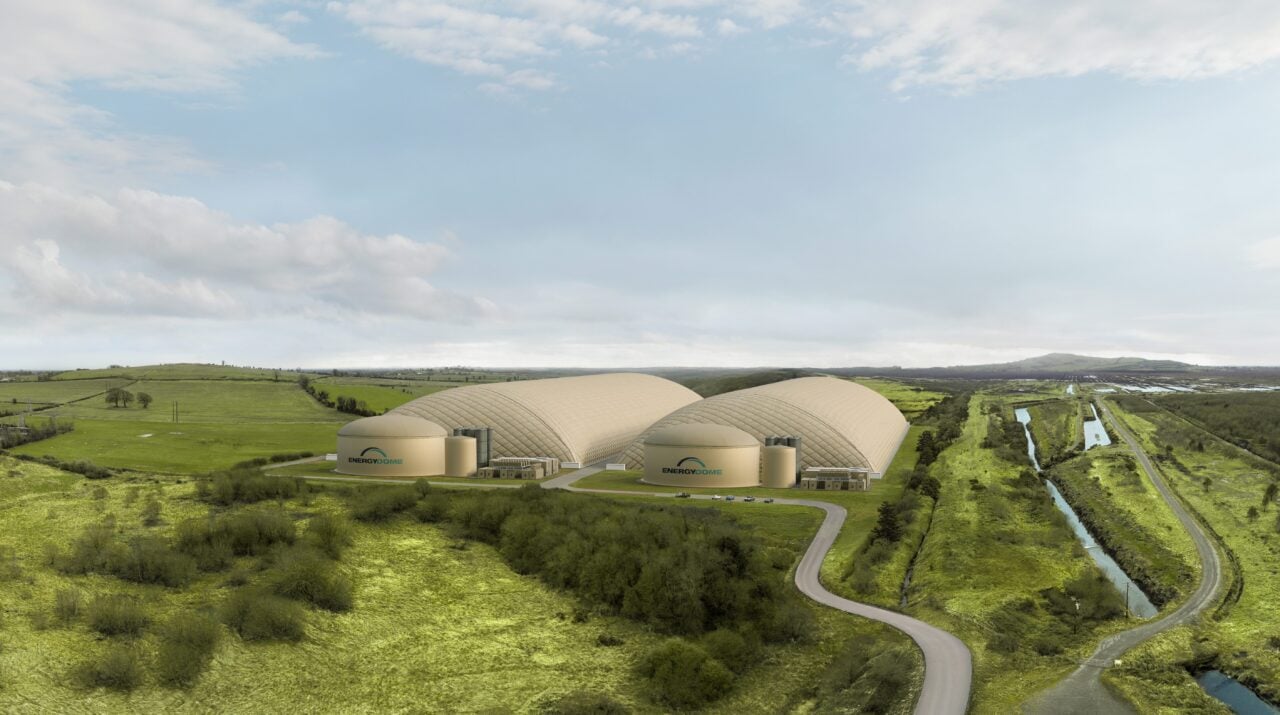
Italian long-duration energy storage startup Energy Dome has signed its second low-carbon energy supply contract with Google—a tolling agreement that makes the technology giant the 100% offtaker for a 23MW/200MWh CO2 battery long-duration storage facility in County Offaly, Ireland. The project leverages Energy Dome's proprietary closed-loop Brayton cycle technology, which liquefies carbon dioxide for energy storage and then expands it through a turbine for discharge, delivering 8 hours of duration at grid scale. Scheduled for commercial operation in 2028, the Offaly facility will provide carbon-free electricity to Google's operations near Dublin while simultaneously alleviating transmission congestion between Ireland's renewable-rich midlands and the Dublin load center.
The CO2 Battery Science: Closed-Loop Brayton Cycle Explained
The CO2 battery long-duration storage system operates on thermodynamic principles that are fundamentally different from electrochemical batteries. During charging, electricity drives a compressor that pressurizes gaseous CO2 into a liquid state, storing energy as the thermodynamic potential between the liquefied and gaseous states. During discharge, the liquid CO2 is heated (using stored thermal energy from the compression process, achieving round-trip efficiency above 75%), vaporized, and expanded through a turbine generator. Unlike lithium-ion batteries, the CO2 Battery does not degrade with cycling—the working fluid (CO2) and mechanical components have no electrochemical aging mechanisms—enabling a 30-year operational life with minimal capacity fade. This makes the technology particularly attractive for applications requiring daily deep cycling, where electrochemical degradation would progressively reduce lithium-ion capacity.
Energy Dome's Commercialization Trajectory: Sardinia to Arizona to Ireland
The Offaly project represents Energy Dome's third commercial deployment, following a 20MW/200MWh demonstration facility in Sardinia, Italy—which has now completed over one year of stable commercial operation—and a previously announced project in Arizona. The CO2 battery long-duration storage company's progression from a single demonstration plant to multi-continent deployment with a Fortune 100 offtaker in approximately three years represents one of the fastest commercialization trajectories in the long-duration storage sector. The Sardinia plant's operational track record was likely decisive in Google's decision to expand its commitment from a single project to a second facility, as the tech giant's 24/7 carbon-free energy ambitions require technologies with proven reliability. For developers evaluating emerging LDES technologies, explore our collection of diversified storage solutions spanning electrochemical, mechanical, and thermal technologies.
Ireland's Grid Congestion: The LDES Value Proposition in Action
The Offaly project's siting is deliberate and strategic: County Offaly sits in Ireland's renewable energy heartland, where wind and solar generation frequently exceed the transmission capacity to Dublin, resulting in significant renewable energy curtailment. By placing 200MWh of CO2 battery long-duration storage at the point of generation oversupply, Energy Dome and Google address two challenges simultaneously: absorbing curtailed renewable energy that would otherwise be wasted, and delivering firm carbon-free power to Google's Dublin-area operations during periods when transmission constraints would otherwise limit supply. This dual value proposition—renewable energy optimization plus transmission congestion relief—is the economic engine that makes long-duration storage projects viable in markets where wholesale energy arbitrage alone would be insufficient.
T-4 Capacity Market Contract: Revenue Stacking for Bankability
The Offaly project has already secured a 10-year T-4 capacity market contract from Irish transmission grid operator Eirgrid, providing a foundational revenue stream that anchors the project's financing. This CO2 battery long-duration storage revenue stack—combining the Google tolling agreement, the Eirgrid capacity contract, and the potential to participate in Ireland's emerging LDES procurement mechanisms—demonstrates the multi-revenue-stream model that is increasingly essential for financing capital-intensive long-duration storage assets. Energy Dome has also secured planning permission and grid connection rights for a second 23MW/200MWh unit at the same site, creating a scalable deployment pathway that can participate in future Irish government LDES procurement rounds without requiring a new development cycle.
Google's 24/7 Carbon-Free Energy Strategy: Why LDES Matters
Google's commitment to 24/7 carbon-free energy—matching its electricity consumption with carbon-free generation on an hourly basis, not just annually—makes CO2 battery long-duration storage essential to the company's decarbonization strategy. While annual renewable energy matching can be achieved with wind and solar alone (with grid exports during oversupply periods compensating for imports during deficits), hourly matching requires storage to bridge the gaps between intermittent generation and continuous data center load. The Energy Dome tolling agreements represent Google's recognition that long-duration storage—capable of shifting renewable energy across 8 hours or more—is the missing piece in the hourly matching puzzle. For corporate offtakers pursuing 24/7 carbon-free energy goals, visit our store to discover AGAIC POWER's BESS platforms designed for corporate renewable energy procurement strategies.
The Global LDES Technology Race: Why CO2 Batteries Stand Out
Among the diverse field of long-duration storage technologies—including flow batteries, compressed air, liquid air, iron-air, and gravity-based systems—the CO2 battery long-duration storage technology offers a unique combination of advantages: no critical mineral dependencies (the working fluid is industrial-grade CO2), no electrochemical degradation (mechanical cycling only), high round-trip efficiency (>75%), compact footprint compared to pumped hydro or compressed air caverns, and operational simplicity that avoids the complex electrolyte management required by flow batteries. The Google deals validate that these technical advantages translate into commercial bankability—a crucial signal for a sector where many technologies have struggled to move from pilot demonstrations to utility-scale deployment with investment-grade offtakers. As Ireland's renewable energy capacity continues its rapid expansion—driven by some of Europe's best wind resources—the Offaly CO2 Battery will be one of the most closely watched LDES projects globally, demonstrating whether thermodynamic storage can deliver on the promise that electrochemistry alone may not fulfill.