

Gold Mine Runs 155 Hours on 100% Renewable Energy: Inside the Off-Grid Microgrid
In a groundbreaking demonstration of off-grid renewable energy mine microgrid capability, Australian gold producer Bellevue Gold achieved 155 consecutive hours—nearly 6.5 days—of "engine-off" operations at its remote Western Australia mine, running entirely on renewable energy with diesel generators completely shut down. The achievement, announced by Perth-based remote power specialist Zenith Energy, represents one of the longest documented periods of 100% renewable operation for an off-grid mining facility anywhere in the world.
The Technical Architecture: Solar, Wind, and BESS in Perfect Harmony
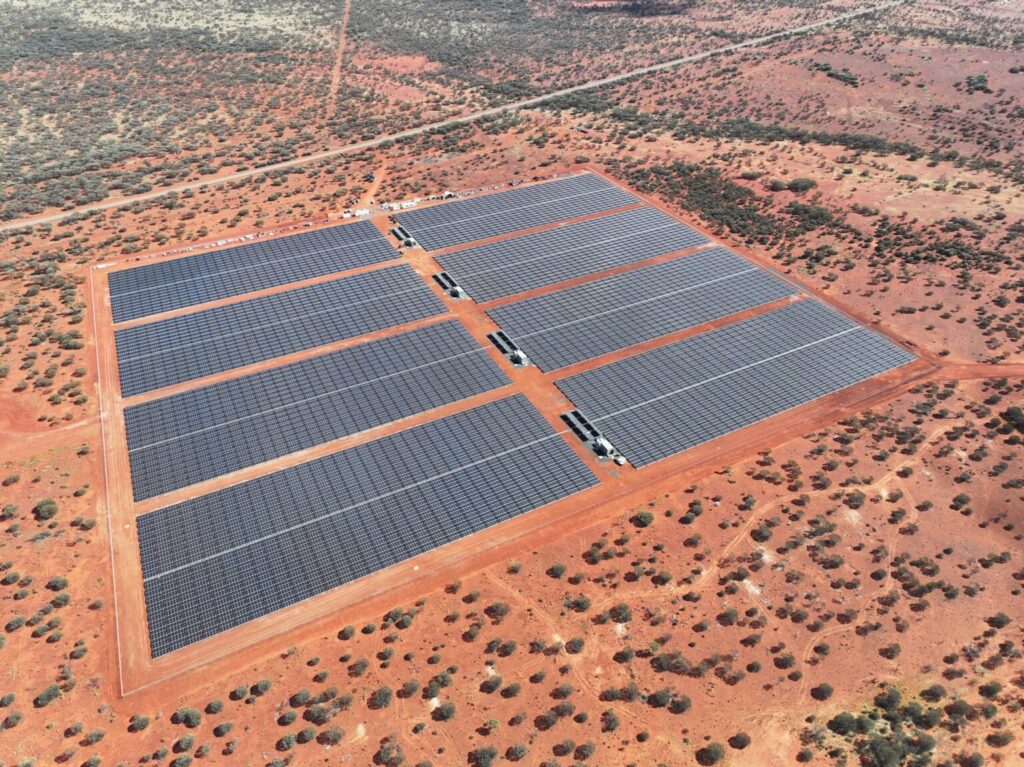
The off-grid renewable energy mine microgrid integrates 27MW of solar photovoltaic generation, 24MW of wind turbines, and a 15MW/30MWh battery energy storage system (BESS), supported by 24MW of thermal backup generation. The system's design principles follow a clear logic: solar generation provides strong daytime output, wind complements during evenings and shoulder periods, and the battery storage system smooths variability while absorbing short peaks in demand. This three-way complementarity is what enables the "engine-off" mode—where diesel generators can be completely shut down for extended periods while maintaining stable, reliable power for both the processing plant and underground mining operations.
80-90% Renewable Penetration: Beyond the 155-Hour Milestone
While the 155-hour achievement captured headlines, the system's year-round performance is equally impressive. Originally designed to meet at least 80% of the 24-hour underground mining operation's energy needs with renewables, the microgrid is forecast to average 80-90% renewable penetration over a typical year, subject to weather conditions and mine demand fluctuations. "Moments like this show what that looks like in practice, especially with the right weather conditions," Zenith Energy noted. The scientific significance lies in proving that hybrid renewable-storage systems can deliver baseload-equivalent reliability in one of the most demanding operational environments—remote, off-grid heavy industry.
Engineering Net-Zero Gold: Scope 1 and 2 Emissions Eliminated
For Bellevue Gold, the renewable microgrid is central to its ambition of becoming Australia's first net-zero (Scope 1 and Scope 2 emissions) gold producer. Managing Director Darren Stralow framed the achievement as a competitive imperative: "We've put out a strategy that's ahead of the market that will have us producing net zero carbon gold by 2026." The company believes carbon-neutral gold production will confer a "major competitive advantage in global investment markets," where ESG-conscious funds increasingly screen for emissions intensity across extractive industries. For mining operators and industrial facilities seeking to replicate this model, shop now to explore AGAIC POWER's industrial-grade energy storage systems engineered for demanding off-grid environments.
Why This Matters for Remote Industry Globally
The Bellevue Gold case study disproves a longstanding assumption in the mining and resources sector: that diesel generation is an unavoidable cost of doing business in remote locations. By demonstrating that a properly sized and intelligently managed hybrid off-grid renewable energy mine microgrid can deliver 6.5 days of continuous diesel-free operation, Zenith Energy and Bellevue Gold have created a replicable template for thousands of off-grid industrial sites worldwide. The key technical insight is that the combination of solar (diurnal), wind (complementary timing), and battery storage (short-duration smoothing) creates a generation profile that, while variable individually, is remarkably stable in aggregate.
The Battery's Critical Role
The 15MW/30MWh BESS serves as the system's linchpin, performing three essential functions simultaneously: frequency regulation to maintain grid stability during cloud transients and wind gusts, energy time-shifting to align renewable generation with 24-hour mine load profiles, and ramping support to bridge the transition between renewable-dominant and thermal-backup operating modes. Without the battery's fast-response capability, the "engine-off" achievement would be technically impossible—underscoring why storage is not merely complementary to renewable generation but essential infrastructure for reliable decarbonization of heavy industry.
A Template for Industrial Decarbonization
Bellevue Gold's 155-hour milestone is more than a sustainability headline—it is a proof of concept for one of the hardest-to-abate sectors in the global economy. As mining companies worldwide face intensifying pressure from investors, customers, and regulators to decarbonize, the Western Australia microgrid demonstrates that the technology exists today. The remaining barriers are not technical but financial and logistical: project financing, supply chain maturity, and operational expertise. For industrial operators ready to begin their decarbonization journey, visit our store to discover how AGAIC POWER's storage solutions can form the backbone of your clean energy transition.


