

Germany Solar-Storage Tender Hits €0.0534/kWh: 33% Price Drop Since 2023
Germany's Federal Network Agency (Bundesnetzagentur) has concluded its latest innovation tender for renewable energy, awarding 29 solar-plus-storage projects with a combined capacity of 482 MW at prices ranging from €0.0475/kWh to €0.0559/kWh. The Germany solar-plus-storage tender achieved a weighted average price of just €0.0534/kWh, continuing a multi-year trend of dramatic cost reduction that has seen average prices fall by 33% since 2023. Shop now for PV-plus-storage solutions engineered for European grid requirements.
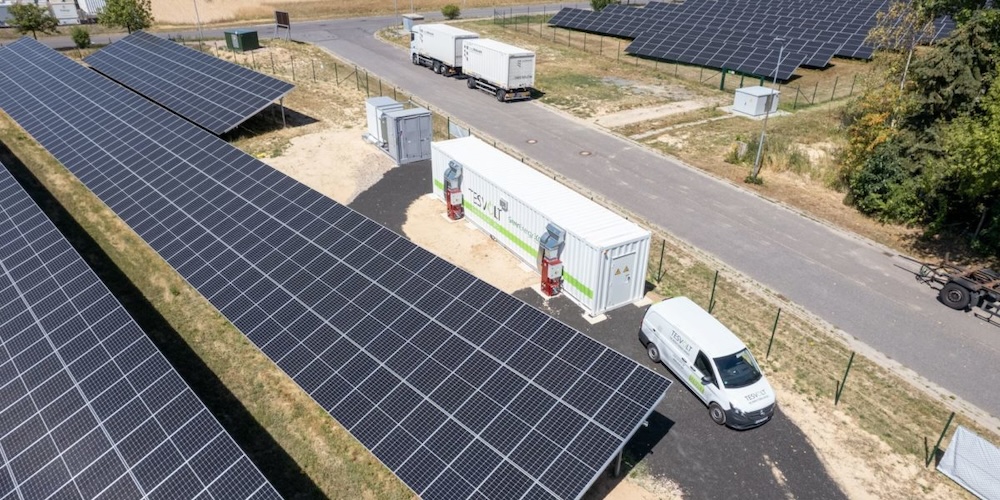
The Numbers: 46 Bids, 749 MW, 29 Winners
The tender attracted 46 bids representing 749 MW of total proposed capacity. After evaluation, 29 projects totaling 482 MW received awards—a competitive process that selected the most cost-effective proposals. Critically, every single awarded project combined photovoltaic generation with battery energy storage, underscoring how solar-plus-storage has become the dominant configuration in Germany's innovation tenders.
Final tariffs ranged from €0.0475/kWh (approximately $0.0540/kWh) to €0.0559/kWh, with the weighted average settling at €0.0534/kWh. These figures represent some of the lowest solar-plus-storage prices ever recorded in a government procurement globally, reflecting both technology cost declines and intense developer competition in the German market.
A Consistent Downward Price Trajectory
The cost trajectory of Germany's innovation tenders tells a compelling story. When the Bundesnetzagentur first introduced these auctions, average prices hovered around €0.08/kWh in October 2023. By July 2024, they had fallen to approximately €0.07/kWh. The October 2024 round brought averages to roughly €0.07/kWh, and subsequent tenders have pushed prices steadily lower. The latest €0.0534/kWh average represents a cumulative decline of over 33% in approximately two and a half years.
This consistent downward trend reflects multiple converging factors: declining lithium-ion battery cell costs, improved system integration efficiency, economies of scale in project development, and fierce competition among developers seeking to build portfolios in Europe's largest energy market.
Regional Distribution
Bavaria dominated the allocation, securing 287 MW of awarded capacity—nearly 60% of the total. Schleswig-Holstein followed with 53 MW, while Brandenburg received 51 MW. Bavaria's outsized share reflects the state's abundant solar resources, available land, and supportive regulatory environment that has made it a magnet for solar-plus-storage development.
Why Solar-Plus-Storage Is Winning
The Bundesnetzagentur's innovation tenders specifically target projects that combine renewable generation with energy storage—a design choice that reflects Germany's evolving grid needs. Pure solar generation faces increasing cannibalization risk as penetration rises, where midday solar floods the market and depresses wholesale prices. Adding storage transforms intermittent solar into dispatchable, schedulable power that can capture higher-value evening and morning price windows.
For developers, the combination offers a superior business case. The storage component qualifies for the same feed-in tariff, effectively subsidizing the battery cost through the renewable energy support mechanism. This has accelerated deployment far beyond what standalone storage business models could achieve at current German wholesale spreads.
Implications for the European Storage Market
Germany's tender results carry implications far beyond its borders. As Europe's largest electricity market, German price signals influence procurement design, technology choices, and investment decisions across the continent. The demonstrated €0.0534/kWh price point for solar-plus-storage sets a benchmark that other European markets will reference when designing their own support mechanisms. Explore our collection of high-performance energy storage systems optimized for European solar integration.
With additional innovation tenders planned, Germany's solar-plus-storage market shows no signs of slowing. The combination of declining costs, proven technology, and supportive policy creates a virtuous cycle that continues to drive deployment higher and prices lower—exactly the trajectory that Europe's clean energy transition demands.


