

Europe's Energy Storage Surpasses Nuclear: 153GW Target Signals Storage Revolution
Europe's energy landscape crossed a historic threshold in the second quarter of 2026, as cumulative installed energy storage capacity officially surpassed nuclear power for the first time. According to the 10th annual European Market Monitor on Energy Storage (EMMES 10.0), published by Energy Storage Europe and LCP Delta, Europe now hosts approximately 105GW of storage capacity, eclipsing the continent's ~105GW nuclear fleet—a symbolic and strategic turning point for the clean energy transition.
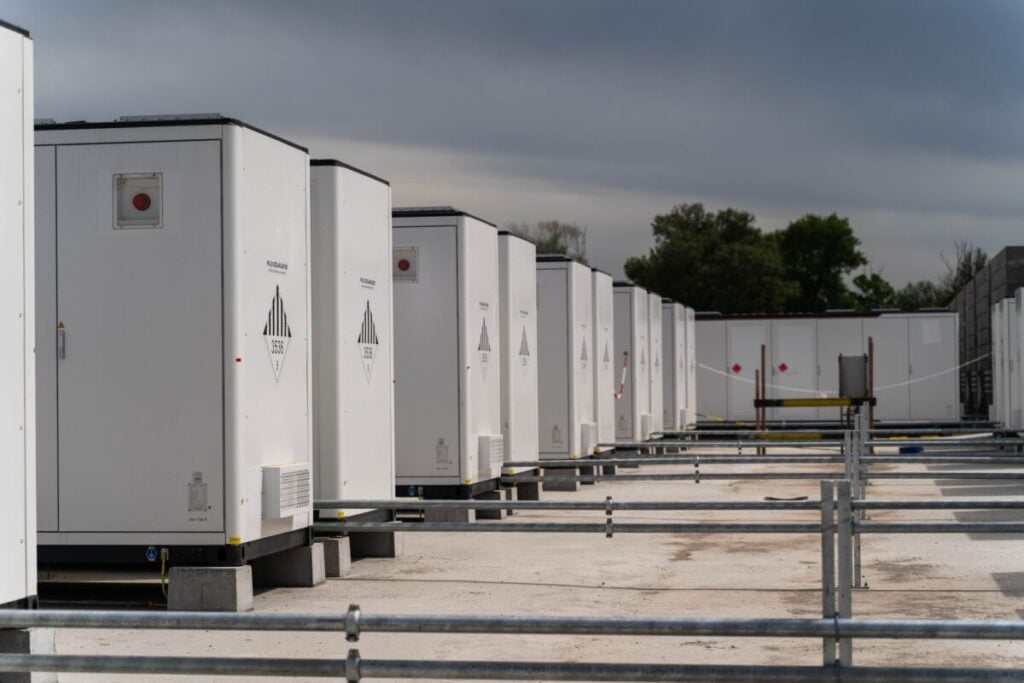
A Record-Breaking Year: 13.5GW of New Storage Deployed in 2025
Europe added a record 13.5GW/26.4GWh of new electrochemical energy storage during 2025, pushing cumulative installations past the 100GW threshold in the third quarter. By year-end, total installed capacity reached 102.7GW, split between legacy pumped hydro (53.3GW) and modern electrochemical storage (48.7GW)—the vast majority of which is lithium-ion battery technology. An additional 400MW of large-scale thermal storage and 300MW of other emerging technologies round out the portfolio.
The Big Three: Germany, Italy, and the UK Each Top 10GW
Germany, Italy, and the United Kingdom each now host more than 10GW of installed storage capacity, cementing their positions as Europe's leading energy storage markets. Spain, France, and Poland trail as the next tier, each with between 5GW and 10GW. The residential behind-the-meter (BTM) segment continues to lead new capacity additions, although front-of-the-meter (FTM) utility-scale battery energy storage systems (BESS) briefly overtook BTM additions in 2024 before the trend reversed in 2025.
2030 Forecast Raised to 153GW: The Acceleration Is Real
Buoyed by heightened market activity, the EMMES 10.0 authors have revised their 2030 forecast sharply upward. The report now projects 153GW/485GWh of additional installations by decade's end—a significant jump from the 128GW/300GWh forecast in last year's edition. The FTM segment alone is expected to contribute 125GW of the 153GW total, reflecting the growing dominance of utility-scale projects across the continent. For businesses and homeowners looking to participate in this growth wave, explore our collection of advanced energy storage solutions designed for European grid requirements.
Why No Country Has Reached Its Full Potential
Despite the impressive headline figures, the report delivers a sobering message: no European country has yet unlocked its full storage potential. Jacopo Tosoni, head of policy at Energy Storage Europe, emphasized that the greatest opportunity "still lies ahead." The key barriers include outdated electricity market designs that fail to reward flexibility services, slow permitting and grid connection processes, and inconsistent access to capacity and ancillary service mechanisms across member states.
What Must Change
Tosoni called for technology-neutral market design, faster grid connections, and clear investment signals to unlock the storage volumes Europe needs. As electrification, renewable deployment, and system flexibility requirements continue to grow, the gap between current policy frameworks and market needs will only widen without urgent reform. For investors and developers navigating this evolving landscape, visit our store to discover how AGAIC POWER's storage systems can help capitalize on Europe's expanding flexibility markets.
From Milestone to Mainstream: What Comes Next
Surpassing nuclear capacity is more than a statistical milestone—it signals that energy storage has moved from a niche flexibility asset to a core pillar of Europe's power infrastructure. With the Smarter E conference underway in Munich this week, the industry has never had more momentum. The question now is whether policymakers will match that momentum with the regulatory frameworks needed to transform 153GW of potential into 153GW of reality.


