Compressed CO2 Battery LDES Technology Explained: Energy Dome's 200MWh Australia Deployment Impact
The compressed CO2 battery long-duration energy storage sector — long considered a promising but commercially unproven technology pathway — has achieved a landmark deployment milestone in Australia. Italy's Energy Dome and Australia's State Electricity Commission of Victoria (SEC) have announced plans to build a 20 MW / 200 MWh compressed CO₂ energy storage facility at the newly established 143-hectare SEC Energy Works innovation park at Hazelwood North in Victoria's Latrobe Valley. Designed for 10-12 hours of continuous discharge, the project represents the first commercial deployment of closed-loop CO₂ thermodynamic cycle storage technology in the Southern Hemisphere — and a deliberate industrial strategy to repurpose one of Australia's most iconic coal regions for clean energy technology leadership.

Overview of the SEC-Energy Dome Latrobe Valley CO₂ Battery Project
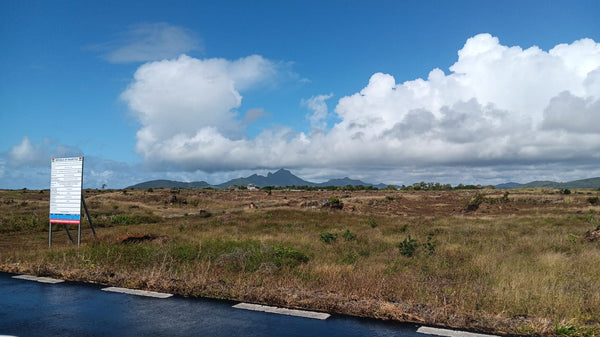
The Hazelwood North CO₂ battery will occupy a portion of the SEC Energy Works site — a 143-hectare industrial innovation precinct established by the revived State Electricity Commission, an entity reconstituted by the Victorian Government in 2023 after its 1990s privatization, with a mandate to accelerate the state's renewable energy transition through public investment in generation, storage, and grid infrastructure. The 20 MW charge/discharge capacity with 200 MWh of energy storage translates to a 10-hour duration at rated power — squarely in the "medium-to-long duration" segment (8-12 hours) that energy system modelers increasingly identify as the critical gap for grids with renewable penetration exceeding 50%.
The project's location in the Latrobe Valley carries deep symbolic and practical significance. For over a century, this region — situated approximately 150 kilometers east of Melbourne — was the epicenter of Victoria's coal-fired electricity generation, hosting the Hazelwood (closed 2017), Yallourn (closing 2028), and Loy Yang (closing 2035) power stations. The SEC Energy Works precinct represents a deliberate strategy to leverage the region's deep pool of power engineering talent — compressor technicians, turbine operators, high-voltage electrical engineers — who possess transferable skills directly applicable to CO₂ battery technology's core components. Energy Dome's CO₂ battery uses industrial turbomachinery (compressors, turbines, heat exchangers) that is fundamentally similar to the equipment Latrobe Valley's coal power workforce has operated and maintained for generations, creating a "just transition" pathway grounded in existing technical competencies rather than requiring wholesale workforce reskilling.
Why This Development Matters: LDES Beyond Lithium and the Just Transition Blueprint
The Energy Dome-SEC project addresses two structural challenges simultaneously: the global shortage of commercially viable long-duration energy storage technologies, and the socioeconomic disruption caused by fossil fuel generation retirement in industrial communities. On the technology side, lithium-ion batteries — which dominate the global energy storage market with over 90% of deployed capacity — face fundamental economic limitations beyond 4-6 hours of duration. The cost of adding incremental MWh of energy capacity in a lithium-ion BESS scales roughly linearly, because each additional MWh requires more cells, more racks, more thermal management, and more balance-of-system infrastructure. This linear cost scaling makes 8-12 hour lithium-ion storage economically challenging in all but the highest-value market applications.
Non-lithium LDES technologies — including Energy Dome's CO₂ battery, Form Energy's iron-air battery, various flow battery chemistries, and compressed air energy storage (CAES) — decouple power capacity (MW, determined by turbomachinery size) from energy capacity (MWh, determined by storage volume). This decoupling means the incremental cost of adding energy capacity is dominated by the cost of storage vessels (steel tanks for CO₂, iron pellets for iron-air, electrolyte tanks for flow batteries) rather than expensive electrochemical cells. For a 10-hour system, this decoupling can reduce the all-in levelized cost of storage by 30-50% compared to an equivalent lithium-ion system.
The just transition dimension is equally important and often overlooked in energy technology narratives. The Latrobe Valley's coal generation workforce — estimated at over 3,000 direct employees at its peak, with thousands more in supporting industries — possesses precisely the mechanical, electrical, and process engineering skills that CO₂ battery technology requires. Compressor maintenance, turbine operation, high-pressure vessel inspection, thermodynamic cycle optimization, and grid interconnection are core competencies for both coal plant and CO₂ battery operations. The SEC Energy Works strategy of co-locating new clean energy infrastructure on former coal sites with direct workforce transition pathways provides a replicable model for industrial regions facing fossil fuel phase-out — from Germany's Rhine-Ruhr to South Africa's Mpumalanga to China's Shanxi province. Explore our energy storage solutions for diverse grid-connected and off-grid applications.
Technical Deep Dive: The Closed-Loop CO₂ Thermodynamic Cycle
Energy Dome's CO₂ battery operates on a fundamentally different physical principle from electrochemical batteries, and understanding this principle is essential to evaluating the technology's commercial viability. The system is a closed-loop thermodynamic cycle that uses carbon dioxide as the working fluid — not as a fuel or chemical reactant, but purely as a medium for storing and releasing mechanical energy through phase changes between gaseous and liquid (or dense-phase supercritical) states.
The charging cycle begins with CO₂ stored at near-atmospheric pressure and temperature in a large, flexible gas holder — essentially an enormous inflatable dome (hence the company's name) constructed of specialized polymer fabric. An electrically driven compressor draws CO₂ from the dome and compresses it through multiple stages with intercooling, raising its pressure to approximately 60-80 bar. At this elevated pressure and controlled temperature, the CO₂ condenses into a liquid or dense-phase supercritical fluid — depending on the exact operating conditions — and is stored in high-pressure steel vessels at ambient temperature. The energy is stored as the pressure-volume work done on the CO₂ during compression, plus the latent heat of condensation — analogous to how pumped hydro stores energy as gravitational potential energy in elevated water.
During discharge, the process reverses. Liquid/supercritical CO₂ is released from the high-pressure vessels, passes through a heat exchanger where it is heated (using stored thermal energy captured during the compression process), expands through a turbine, and returns to the low-pressure gas holder. The turbine drives a generator that produces electricity. The critical engineering innovation — and the key to achieving the claimed 75-80% round-trip efficiency — is the thermal energy storage system. During compression, the heat of compression (which would otherwise be wasted) is captured in a thermal storage medium (typically a packed bed of stones, ceramics, or phase-change materials). During expansion, this stored heat is returned to the CO₂ before it enters the turbine, preventing the temperature drop that would otherwise reduce turbine efficiency and potentially cause CO₂ to freeze or form solid dry ice at the turbine exhaust.
The thermodynamic cycle efficiency is governed by the pressure ratio between the high-pressure storage vessels and the low-pressure gas holder — higher pressure ratios enable greater energy density. At the reported 60-80 bar operating pressure, Energy Dome achieves an energy density of approximately 10-15 kWh per cubic meter of storage volume — roughly 1/20th of lithium-ion battery energy density but comparable to pumped hydro and 5-10 times higher than conventional compressed air energy storage (which operates at much lower pressure ratios in underground caverns). The 200 MWh Hazelwood North installation will require approximately 15,000-20,000 cubic meters of high-pressure storage volume, which can be accommodated in a modest array of horizontal or vertical steel pressure vessels occupying roughly 0.5-1 hectare of land area.
The round-trip efficiency of 75-80% is competitive with pumped hydro (70-85%) and superior to conventional CAES (40-55% for diabatic systems, 60-70% for advanced adiabatic designs) and hydrogen-based long-duration storage (30-40% for power-to-gas-to-power). The capital cost is projected at $200-300/kWh for 10-hour duration systems at current manufacturing volumes, with a pathway to $120-180/kWh as standardized manufacturing scales — competitive with lithium-ion BESS at 4-6 hours and substantially lower for durations beyond 8 hours. The operational life — 30+ years without significant degradation — exceeds lithium-ion (10-15 years) and is comparable to pumped hydro, reflecting the use of mature industrial turbomachinery with well-established maintenance and refurbishment cycles.
Sightline Climate LDES Ranking and Competitive Positioning
Energy Dome's CO₂ battery was ranked third in Sightline Climate's January 2026 LDES vendor competitiveness assessment — behind only Tesla (Megapack) and Chint Power (a Chinese power electronics and BESS manufacturer), and ahead of all other non-lithium technologies including Form Energy (iron-air), Eos Energy (zinc hybrid-cathode), and various flow battery providers. This ranking reflects Energy Dome's progress on four dimensions that Sightline uses to evaluate LDES vendors: technology readiness (TRL), manufacturing scalability, project pipeline maturity, and levelized cost trajectory.
The technology readiness dimension benefits from the CO₂ battery's use of mature, off-the-shelf industrial components — compressors, turbines, heat exchangers, and pressure vessels that have been manufactured and operated for decades in the oil and gas, chemical processing, and power generation industries. Unlike flow batteries (which require specialized membrane and electrode manufacturing) or metal-air batteries (which require novel electrode architectures), Energy Dome's supply chain does not require building new manufacturing capabilities from scratch — it leverages existing global industrial supply chains with multiple qualified suppliers for every major component.
The project pipeline is equally important. In addition to the Hazelwood North project with SEC Victoria, Energy Dome has signed commercial agreements for CO₂ battery installations in Sardinia, Italy (with Engie, targeting 2027 COD), Ireland (with Google for data center clean energy matching), and Arizona, USA (with Salt River Project and Google for grid-scale storage in SRP's service territory). This geographically diversified pipeline — spanning Europe, Australia, and North America — provides the demand visibility that manufacturing partners require to invest in production capacity and that project finance lenders require to underwrite construction debt.
Industry Impact: The Latrobe Valley as Global LDES Demonstration Hub
The Hazelwood North CO₂ battery's significance extends beyond the specific 20MW/200MWh project parameters. The SEC Energy Works precinct is designed as a multi-technology clean energy innovation campus — not a single-project site — and the CO₂ battery is expected to be the anchor tenant that catalyzes additional investment. The precinct's 143-hectare footprint provides room for technology demonstrations, workforce training facilities, and supply chain co-location that could transform the Latrobe Valley from a symbol of coal-era decline to a global center of excellence for long-duration energy storage.
The project's timing aligns with Victoria's ambitious renewable energy targets — 65% renewable electricity by 2030 and 95% by 2035 — which will require substantial energy storage to manage the intermittency of wind and solar generation. Victoria's grid already experiences periods where renewable generation exceeds demand, resulting in negative wholesale electricity prices and curtailment. As the state's renewable capacity grows from the current ~12 GW to a projected 25-30 GW by 2035, the need for 8-12 hour storage to shift surplus midday generation to evening and overnight demand will become acute — and the CO₂ battery's 10-12 hour duration profile is precisely matched to this system requirement.
For the global energy storage industry, the Hazelwood North project provides a high-visibility, government-backed demonstration of CO₂ battery technology in a real grid environment. The project's success or failure will have outsized influence on investor and utility confidence in thermodynamic-cycle-based LDES — a technology category that currently receives far less attention and capital than electrochemical batteries despite potentially superior economics for long-duration applications. If Energy Dome delivers on its cost and performance targets, the Hazelwood North project could catalyze a wave of CO₂ battery deployments in markets with high renewable penetration, aging fossil fuel infrastructure, and industrial workforces seeking clean energy transition pathways.
Future Outlook: CO₂ Battery Deployment Roadmap and Scaling Trajectory
Energy Dome's deployment roadmap envisions the Hazelwood North project reaching commercial operation in 2028-2029, with the Sardinia project (Engie) serving as the first commercial-scale reference plant in 2027-2028. The near-term scaling path is project-finance-dependent: the first 2-3 projects will likely require concessional financing (development bank support, government guarantees, or strategic corporate offtake agreements) that reflect the technology's limited operational track record. Once the reference plants accumulate 2-3 years of operational data demonstrating round-trip efficiency, availability, and maintenance costs consistent with projections, project finance lenders should be willing to underwrite construction debt for subsequent projects on standard commercial terms — a transition that typically unlocks order-of-magnitude increases in deployment volumes.
The Hazelwood North project's most enduring contribution may be its demonstration of an industrial heritage-to-clean-energy transition model that can be replicated globally. As countries accelerate fossil fuel generation retirement under Paris Agreement commitments, the question of "what happens to coal communities" becomes increasingly urgent — and politically consequential. The SEC Energy Works approach — co-locating new clean energy infrastructure on former coal sites, employing the existing workforce's transferable skills, and branding the transition as technological evolution rather than industrial decline — offers a template that could transform the political economy of the energy transition from one of loss and resistance to one of renewal and opportunity. At AGAIC POWER, we believe that technology innovation and social inclusion are complementary — not competing — priorities in building the clean energy future.