

California's First 8-Hour Lithium-Ion BESS Goes Live: REV Renewables Delivers LDES Milestone
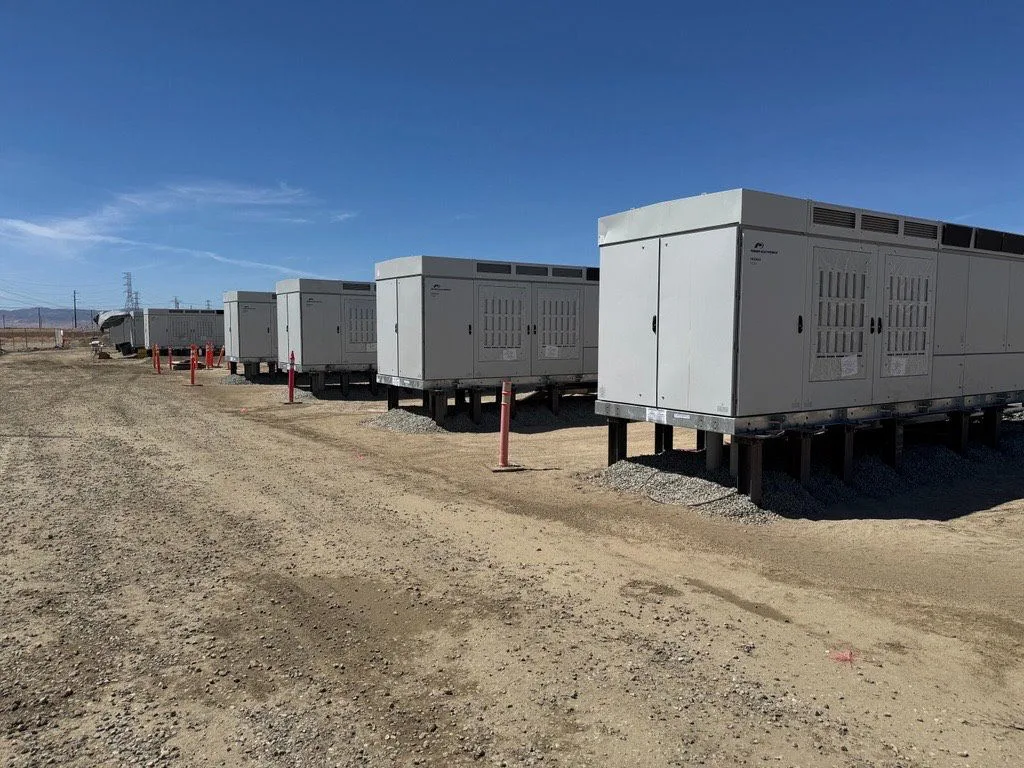
California's energy storage landscape has passed a historic technical milestone with the commissioning of Tumbleweed Energy Storage in Kern County—the state's first 8-hour lithium-ion BESS facility. Developed by REV Renewables and parent company LS Power in partnership with community choice aggregators (CCAs) Ava Community Energy and California Community Power, the project was brought online ahead of the California Public Utilities Commission's (CPUC) Mid-Term Reliability procurement deadline, demonstrating that lithium-ion technology can credibly serve the long-duration energy storage (LDES) segment once considered the exclusive domain of emerging chemistries.
The Science of 8-Hour Storage: Why Duration Matters
The distinction between 2-hour, 4-hour, and 8-hour storage is not merely incremental—it represents a fundamental shift in grid service capability. While 2-hour systems excel at frequency regulation and intra-hour ramping, and 4-hour batteries can shift solar generation into evening peak periods, an 8-hour lithium-ion BESS can bridge overnight demand, cover extended cloud events, and serve as genuine capacity replacement for retiring thermal generation. The Tumbleweed project, built in two phases with a final expansion reaching 125MW/1,000MWh, proves that lithium-ion's cost curve has advanced far enough to make 8-hour deployment economically viable at utility scale. The project satisfies 55% of the CPUC's Mid-Term Reliability requirement for 8-hour minimum storage procurement.
Inside the CCA Procurement Model: Eight Communities, One Vision
Tumbleweed was procured through an innovative CCA collaboration that began in June 2020—well before the CPUC formalized its Mid-Term Reliability mandate. Eleven CCAs initially sought LDES providers, and by October 2020, eight had issued a request for offers targeting up to 500MW of 8-to-16-hour storage with 10-year contracts. The resulting CC Power Joint Powers Agency—representing CleanPowerSF, Peninsula Clean Energy, Redwood Coast Energy Authority, San José Clean Energy, Silicon Valley Clean Energy, Sonoma Clean Power, and Valley Clean Energy—demonstrated that aggregated municipal demand can drive utility-scale storage procurement as effectively as traditional investor-owned utility (IOU) mandates.
Lithium-Ion Dominates the LDES Pipeline: What the Data Shows
Contrary to the narrative that emerging non-lithium technologies would dominate long-duration storage, market data reveals a different reality. According to Sightline Climate, lithium-ion already accounts for half of the global long-term project pipeline for inter-day (8-70 hour) LDES and most projects coming online by 2030. Wood Mackenzie's Long Duration Energy Storage Trends report confirms that while global LDES funding declined 30% in 2025—with venture capital falling 72%—lithium-ion's decade-long cost reduction trajectory gives it an insurmountable near-term advantage. Priya Shrivastava, Wood Mackenzie's energy storage supply chain research manager, noted that emerging LDES technologies will find it "difficult to achieve the similar dramatic cost reductions" that lithium-ion has realized. For project developers navigating this technology landscape, shop now to discover AGAIC POWER's lithium-ion BESS solutions optimized for long-duration applications.
The Net-Zero Storage Imperative: From 2.5 Hours to 20 Hours
Wood Mackenzie's analysis projects that global net-zero scenarios require average storage duration to expand from today's 2.5 hours to approximately 20 hours—particularly for countries targeting renewable energy penetration above 50% by 2030. This dramatic scaling requirement underscores why the 8-hour lithium-ion BESS California milestone at Tumbleweed carries significance far beyond Kern County: it validates a technical pathway that can be replicated across any grid facing thermal plant retirements and rising renewable penetration. The CPUC's mandate for 11.5GW of new clean energy resources within five years—driven by natural gas plant retirements and the Diablo Canyon nuclear facility closure—created the regulatory forcing function that made Tumbleweed economically bankable.
Data Centers: A New Pathway for LDES Commercialization
While CCAs drove Tumbleweed's procurement, data centers have recently emerged as a parallel commercialization pathway for non-lithium LDES technologies. The 24/7 carbon-free energy commitments of major hyperscale operators create demand profiles that 8-hour and longer storage is uniquely positioned to serve, potentially unlocking a second wave of LDES deployment beyond the utility procurement model. For data center operators and industrial consumers evaluating behind-the-meter storage strategies, visit our store to explore AGAIC POWER's flexible BESS configurations.
A Template for the 8-Hour Storage Era
Tumbleweed's successful commissioning ahead of regulatory deadlines establishes a replicable template: CCAs aggregate demand, developers secure EPC partnerships with experienced contractors like Mortenson, and lithium-ion technology delivers at a cost point that satisfies both utility procurement requirements and project finance criteria. As more states and countries mandate longer-duration storage to support deep decarbonization, the Kern County milestone will be remembered as the moment 8-hour lithium-ion BESS graduated from concept to commercial reality.


