1GWh Iron-Air Battery Deal: Ore Energy's Multi-Day Storage Lands Dutch Utility Contract
Amsterdam-based iron-air battery energy storage startup Ore Energy has secured a landmark agreement with Dutch utility Budget Thuis to deploy up to 1,000MWh of multi-day-duration batteries, marking one of the most significant commercial commitments to non-lithium long-duration energy storage (LDES) in Europe to date. The deal includes a binding 400MWh first phase targeted for delivery in 2028.
How Iron-Air Technology Works: 24 to 100 Hours of Continuous Discharge
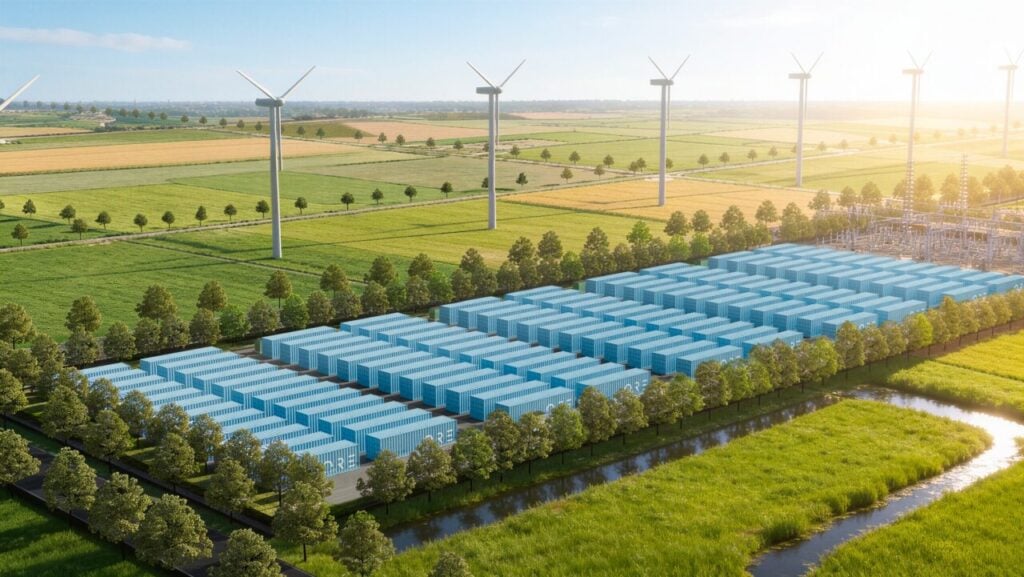
Ore Energy's battery chemistry harnesses iron, water, and air—three of the most abundant materials on Earth—to deliver discharge durations ranging from 24 to 100 hours. Each megawatt-hour-scale unit is packaged in a standard 40-foot shipping container, making deployment modular and scalable. At approximately €16/kWh (US$18.50), the technology competes directly with the cost structure needed for multi-day storage applications that conventional lithium-ion batteries are not designed to serve.
Why Wind-Heavy Grids Need Multi-Day Storage
CEO Aytaç Yilmaz articulated a compelling vision: "Iron-air will become as important for wind as lithium-ion has been for solar." While short-duration batteries effectively shift solar generation by a few hours, wind-heavy European grids experience generation gaps that span multiple days. During periods of wind drought, fossil fuel peaker plants must fill the void—a dependency that multi-day iron-air battery energy storage systems are uniquely positioned to eliminate. For utilities and grid operators seeking reliable long-duration solutions, shop now to explore AGAIC POWER's comprehensive energy storage portfolio.
Budget Thuis Bets on Energy Independence
Budget Thuis CEO Annemarie Buitelaar framed the deal as a strategic hedge against fossil fuel price volatility. "For us, this is about reducing exposure to volatile fossil fuel prices while giving customers access to cleaner and more predictable electricity over time," she said. The utility, which provides both energy and telecom services, plans to integrate the iron-air systems across its portfolio, starting with the 400MWh first phase. This commitment signals that European utilities are increasingly viewing non-lithium LDES as commercially viable rather than experimental.
Ore Energy vs. Form Energy: The Iron-Air Race Heats Up
Ore Energy is one of only two startups globally commercializing iron-air battery technology, alongside US-based Form Energy. Both companies claim similar theoretical energy densities of 1,200Wh/kg and design for up to 100-hour discharge at comparable costs. However, Form Energy holds a significant lead in commercial rollout, having announced a 30GWh utility deal in Minnesota and a 12GWh agreement with data center builder Crusoe. Ore Energy, founded in 2022, recently completed a grid-connected 100-hour pilot with EDF in France and is now evaluating manufacturing sites in Germany or the Netherlands.
A European Supply Chain Advantage
Yilmaz emphasized one critical differentiator: Ore Energy's technology can be manufactured "using a supply chain that Europe controls." As the continent pushes for strategic autonomy in clean energy technologies, the cobalt-free, lithium-free nature of iron-air batteries positions them as both an economic and geopolitical asset. For those tracking the evolution of next-generation storage technologies, explore our collection of cutting-edge energy solutions.
The LDES Tipping Point
Ore Energy's deal arrives just days after European utilities' association Eurelectric published analysis confirming that non-lithium LDES technologies are increasingly viable as flexibility options for the continent's grids. With renewable curtailment already wasting "electricity that costs billions to generate," as Yilmaz noted, the economic case for multi-day storage has never been stronger. The Budget Thuis agreement may well mark the moment iron-air batteries graduated from pilot projects to portfolio-scale infrastructure.