16GW Virtual Power Plant: Tesla, Sunrun & Renew Home Unveil Largest US VPP Framework for PJM
Tesla, Sunrun, and Renew Home have announced a landmark agreement to build what they describe as the largest virtual power plant VPP in the United States—a framework capable of delivering more than 16GW of flexible energy capacity by aggregating hundreds of thousands of residential battery systems and over 8 million smart thermostats. Announced on June 24, 2026, the tri-party arrangement targets hyperscale data center operators and electric utilities, with an immediate commitment to provide over 1GW of capacity to PJM Interconnection's proposed Reliability Backstop Procurement program.
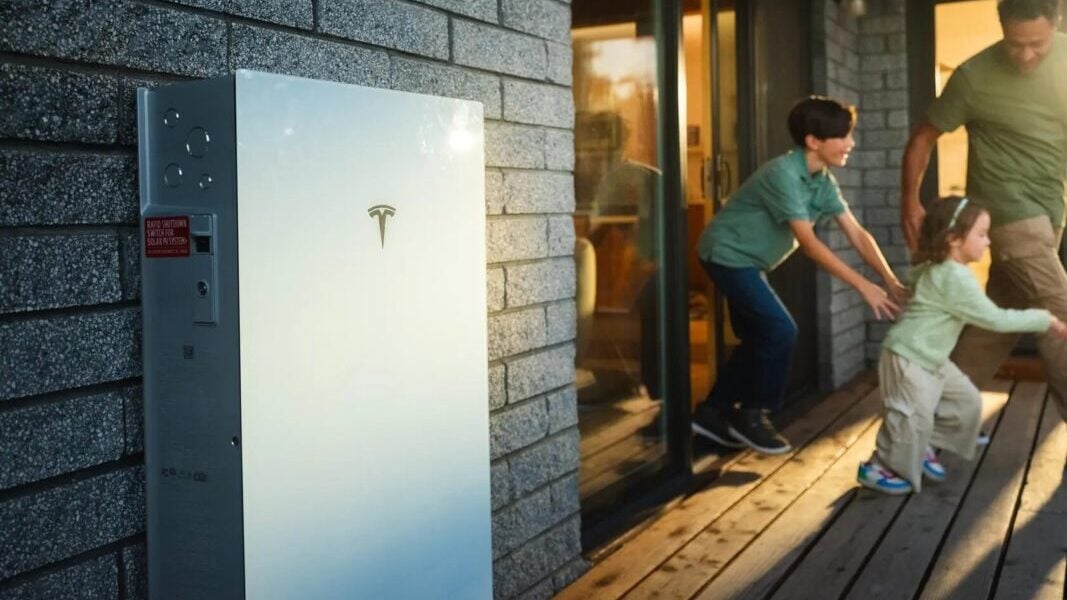
Immediate Deployment: 300MW Ready Now in Virginia's Data Center Alley
In Virginia—home to the world's largest concentration of hyperscale data centers—the three companies report having more than 300MW of virtual power plant VPP capacity available for immediate deployment, with projections reaching at least 500MW by 2030 as residential battery and smart thermostat installations continue to grow. "The grid of the 1800s cannot power the innovation of 2026," said Mary Powell, CEO of Sunrun, emphasizing that the VPP framework enables data centers to maintain operations during peak grid stress without forcing ratepayers to fund costly new infrastructure. The companies position distributed residential resources as deployable in months rather than years—a critical advantage given that PJM's interconnection queue currently stretches beyond 2029 for many large-scale generation projects.
The Aggregation Architecture: How 16GW Comes Together
The virtual power plant VPP framework operates through a sophisticated tri-layer aggregation model. At the device layer, Tesla Powerwall and Sunrun Brightbox home battery systems provide dispatchable energy export capacity, while Renew Home's smart thermostat platform manages over 8 million connected devices capable of shifting household load during peak demand hours. At the aggregation layer, the three companies' combined platforms create a single procurement point—allowing utilities and hyperscalers to contract for capacity without negotiating with hundreds of thousands of individual homeowners. At the market layer, the aggregated resource participates in wholesale capacity markets, ancillary services, and bilateral power purchase agreements across PJM and other major electricity markets nationwide.
PJM Reliability Backstop: Over 1GW of Committed Capacity
The companies' commitment to PJM's proposed Reliability Backstop Procurement represents the framework's first concrete market participation. If accepted by PJM, the commitment would immediately unlock more than 1GW of virtual power plant VPP capacity, with additional resources deployable in subsequent years for peak shaving, locational grid relief, and fast-responding ancillary services. The firms cite Brattle Group analysis indicating that improved utilization of existing grid infrastructure through VPP aggregation could reduce US electricity bills by $110 billion to $170 billion over the next decade—while simultaneously accelerating data center interconnection timelines by several years. For developers and asset owners seeking flexible capacity solutions, explore our collection of energy storage systems engineered for virtual power plant integration.
The Competitive Landscape: Voltus-Google Precedent and Puerto Rico Expansion
This announcement follows a string of precedent-setting VPP deals that have validated the distributed aggregation model. Earlier in June 2026, VPP operator Voltus and Google signed a three-year 100MW agreement for the PJM region, aggregating distributed energy resources from local businesses and homes into a Google-funded VPP that pays participating customers directly. In Puerto Rico, Tesla, Sunrun, and SunStrong Management successfully secured regulatory approval to auto-enroll residential battery participants in an emergency capacity resource program—a model that could accelerate VPP enrollment in mainland markets. These precedents demonstrate that the virtual power plant VPP model has moved from pilot phase to bankable commercial reality, with major corporate offtakers now competing for access to aggregated residential capacity.
Residential Customer Value: Compensation and Ratepayer Protection
Critically, the framework includes direct compensation mechanisms for residential customers who participate in grid-supporting programs through their home batteries and smart thermostats. The companies emphasize that the VPP model protects American families from bearing the costs of new transmission and generation infrastructure—costs that would otherwise flow through to ratepayers via higher electricity bills. By utilizing existing residential energy infrastructure without requiring additional hardware, software, interconnection studies, water, or land usage, the virtual power plant VPP approach represents what the companies call a "capital-light" pathway to grid reliability. For homeowners and businesses interested in VPP participation, visit our store to discover battery storage solutions that qualify for grid services programs.
First-Come, First-Served Allocation Model
The companies have indicated that available VPP capacity will be allocated on a first-come, first-served basis across US electricity markets—a structure that creates urgency for utilities and data center operators seeking to secure firm, dispatchable capacity without multi-year infrastructure buildouts. With PJM's capacity market facing unprecedented demand growth driven by AI computing infrastructure and data center load, the race to lock in distributed capacity commitments has effectively begun. The 16GW framework represents a structural shift in how grid reliability is procured: from centralized generation toward distributed, aggregated, and consumer-owned resources that can be activated within months rather than decades.
What the 16GW VPP Framework Means for the Energy Storage Industry
The Tesla-Sunrun-Renew Home agreement signals a fundamental transformation in how virtual power plant VPP capacity is valued, procured, and deployed at utility scale. By creating a standardized framework for aggregating residential storage and demand-side resources into GW-scale grid assets, the partnership establishes a template that could be replicated across every major US electricity market. For the broader energy storage industry, the message is clear: distributed residential batteries are no longer just behind-the-meter assets serving individual homeowners—they are becoming the building blocks of a new grid reliability paradigm that competes directly with utility-scale storage projects on cost, speed, and scalability. As Mary Powell stated, "Americans deserve innovation that does not create unnecessary energy costs"—and the 16GW VPP framework may prove to be exactly that.