16 LDES Projects Win UK's 7.6GW Cap-and-Floor: 18-Hour Lithium-Ion Breaks Records
The United Kingdom's energy regulator Ofgem has announced the winners of the inaugural Long-Duration Energy Storage cap-and-floor window, selecting 16 projects totaling an extraordinary 7,645MW of capacity with discharge durations ranging from 8 to 22 hours. The LDES cap-and-floor UK results represent the largest single procurement of long-duration storage capacity in European history, and include what are poised to become the world's longest-duration lithium-ion battery storage projects—18-hour BESS installations totaling 1.6GW/26.8GWh from developer Field Energy alone.
The Revenue Cap-and-Floor Mechanism: How It Works
The LDES cap-and-floor UK mechanism is designed to solve the fundamental financing challenge facing long-duration storage: while these assets deliver enormous system value through reliability and grid balancing, their revenues from wholesale energy markets alone are often insufficient to justify investment. The cap-and-floor structure guarantees a minimum revenue floor—ensuring developers can recover their costs—while capping upside returns above a certain threshold, with excess revenues returned to consumers. This mechanism, pioneered successfully for UK electricity interconnectors, has now been adapted for storage, creating bankable revenue certainty that unlocks private capital for projects requiring hundreds of millions to billions of pounds in upfront investment.
Field Energy's 1.6GW/26.8GWh: Redefining Lithium-Ion Duration Limits
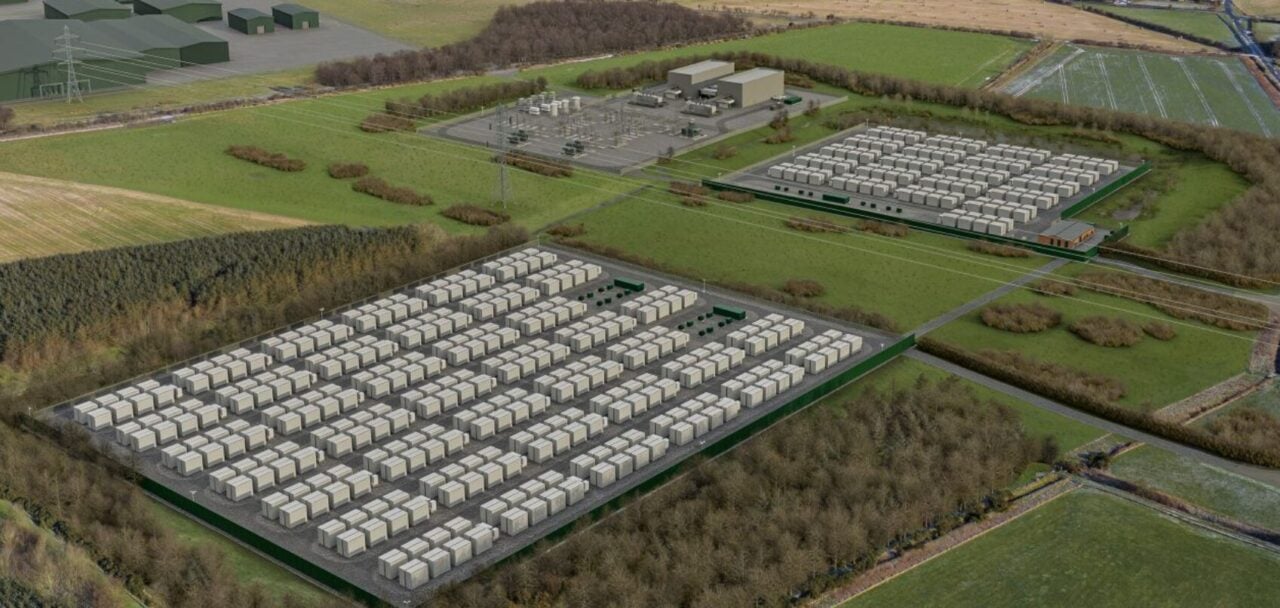
The most striking outcome from the LDES cap-and-floor UK results is Field Energy's portfolio of five lithium-ion BESS projects aggregating to 1.6GW/26.8GWh, with an average duration of 16.75 hours per project. Field CEO Amit Gudka stated these will become "among the longest-duration lithium-ion battery storage projects anywhere in the world," challenging the conventional wisdom that lithium-ion is cost-effective only at durations of 4 hours or less. The Field projects achieve these durations not through any single technological breakthrough but through a modular aggregation approach that strings together enough 4-hour blocks to deliver multi-hour discharge at competitive cost—a strategy that has been validated by Ofgem's rigorous cost-benefit analysis conducted for the cap-and-floor evaluation.
Technology Diversity: Pumped Hydro, CAES, VRFB, and Zinc Hybrid
While lithium-ion grabbed headlines, the LDES cap-and-floor UK portfolio is notably technology-diverse. Pumped storage hydro (PSH) and lithium-ion BESS account for the largest capacity shares, but the winning list also includes two compressed air energy storage (CAES) projects, a vanadium redox flow battery (VRFB) installation, and a zinc hybrid cathode technology project. This diversity reflects Ofgem's deliberate technology-neutral procurement design—the cap-and-floor evaluates projects on their system value and cost, not their technology. For the flow battery and CAES industries, securing cap-and-floor awards represents a crucial commercialization milestone, validating that non-lithium LDES technologies can compete on cost with established alternatives when evaluated on a full-system-value basis.
Scotland's Grid Congestion: The Geographic Logic of LDES Siting
The geographic distribution of the 16 winning projects reveals the LDES cap-and-floor UK framework's strategic intent: the majority are sited in northern Scotland, where abundant wind generation frequently exceeds transmission capacity to southern load centers. By placing long-duration storage at the point of generation oversupply, the cap-and-floor mechanism addresses two problems simultaneously—reducing renewable energy curtailment and alleviating transmission congestion that would otherwise require billions in grid reinforcement. This geographic strategy, explicitly referenced by Ofgem, positions LDES not merely as a reliability resource but as a transmission alternative, capturing value from avoided grid infrastructure costs that traditional wholesale market signals do not price. For investors evaluating storage siting strategies, explore our collection of BESS solutions optimized for grid-congested renewable energy zones.
Ofgem's Sizing Strategy: Taking the Upper Bound to Hedge Attrition
Ofgem deliberately selected from the upper end of its 2.7–7.7GW target range, a decision the regulator justified by citing likely project attrition as winners progress through detailed engineering, planning consent, and financing stages. This "hedge against attrition" strategy—selecting more projects than the system strictly needs, anticipating that some will fall away—is borrowed from renewable energy auction design and reflects a pragmatic recognition that a 7.6GW award list will likely translate to something closer to 5-6GW of commissioned capacity. The next LDES cap-and-floor UK window is expected to open in 2027, with lessons from Window 1 informing potential adjustments to the mechanism design, including duration requirements, geographic preferences, and the balance between technology diversity and cost optimization.
The 18-Hour Lithium Breakthrough: Economics of Extended Duration
Field Energy's 18-hour lithium-ion projects represent a fascinating economic innovation: rather than designing cells for extended discharge, the company achieves multi-hour duration through massive overbuild of standard-duration battery modules. This approach trades higher upfront capital cost (more batteries) against dramatically lower per-kWh costs (standard cells produced at enormous scale) and operational simplicity (familiar lithium-ion BMS and thermal management). The LDES cap-and-floor UK revenue floor makes this strategy financeable by guaranteeing minimum annual revenue regardless of how many operating hours the asset actually accumulates—a feature that is essential for financing assets with high capital intensity and uncertain wholesale market utilization. For developers and asset owners, visit our store to discover flexible BESS configurations that can be scaled from 2-hour to multi-hour applications.
What LDES Window 1 Means for Global Long-Duration Storage Markets
The UK's LDES cap-and-floor UK Window 1 results provide a globally significant template for how governments can procure long-duration storage at scale through competitive, technology-neutral mechanisms. The combination of revenue certainty (cap-and-floor), technology neutrality (no prescribed chemistry or topology), rigorous cost-benefit assessment, and geographic targeting of grid congestion zones creates a procurement framework that other markets—from California to Germany to Australia—can adapt to their own regulatory and market structures. With 7.6GW of LDES now moving toward construction in the UK alone, the global LDES market has received its strongest policy signal yet: long-duration storage is no longer a research topic or pilot program, but a procurement category that governments are willing to underwrite at gigawatt scale.